

Alloy 625 plate price is influenced by nickel content, production process, plate thickness, and global raw material fluctuations. As a high-performance nickel-based alloy, Alloy 625 (UNS N06625) is widely used in aerospace, marine, oil & gas, and chemical industries due to its excellent corrosion resistance and high-temperature strength. This guide provides a comprehensive breakdown of Alloy 625 plate pricing and the key factors affecting cost.
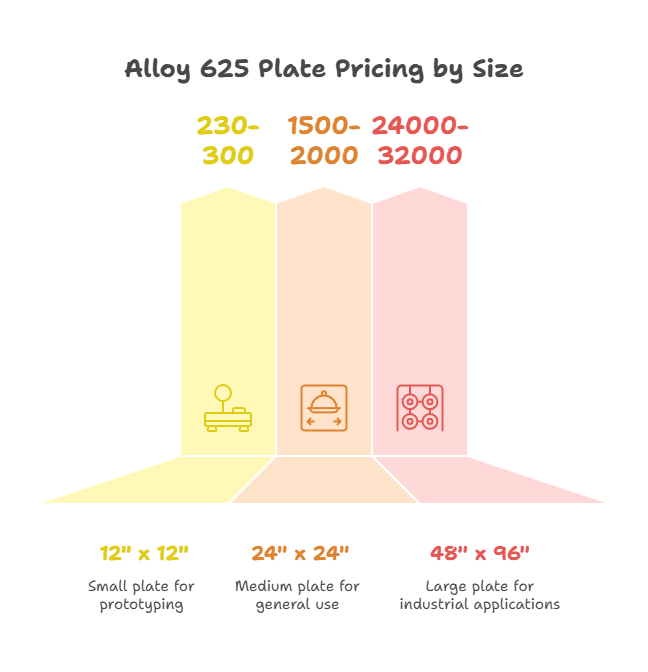
Alloy 625 Plate Price Overview
Alloy 625 plates are considered premium materials due to their high nickel and molybdenum content. Prices vary depending on thickness, width, surface condition, and compliance with international standards.
What Is Alloy 625 Plate (UNS N06625 Introduction)
Definition
Alloy 625 is a nickel-chromium-molybdenum alloy with niobium, offering excellent resistance to corrosion and oxidation without the need for precipitation hardening.
Main Characteristics
- Outstanding corrosion resistance in seawater and chemical environments
- High strength across a wide temperature range
- Excellent weldability and fabrication performance
Key Properties of Alloy 625 Plate
| Property | Performance |
|---|---|
| Corrosion Resistance | Excellent in marine and acidic environments |
| Temperature Resistance | Up to ~980°C |
| Mechanical Strength | High without heat treatment |
Average Alloy 625 Plate Price Range
Price by Unit
| Unit | Price Range | Description |
|---|---|---|
| USD/kg | $80 – $140 | Depends on thickness and processing |
| USD/ton | $80,000 – $140,000 | Bulk industrial pricing |
Price Differences by Thickness and Size
Thickness Impact
Thicker plates generally have lower cost per kilogram due to easier rolling processes, while thin precision plates are more expensive due to tighter tolerances.
| Thickness Range | Price Level |
|---|---|
| < 6 mm | Higher |
| 6 – 20 mm | Medium |
| > 20 mm | Lower per kg |
Hot Rolled vs Cold Rolled Alloy 625 Plate Price Comparison
| Process | Price Level | Characteristics |
|---|---|---|
| Hot Rolled | Lower | Standard industrial applications |
| Cold Rolled | Higher | Better surface finish and precision |
Annealed vs Solution Treated Plate Cost Differences
| Condition | Cost Level | Description |
|---|---|---|
| Annealed | Medium | Improved ductility |
| Solution Treated | Higher | Enhanced corrosion resistance and strength |
Nickel Content Impact on Plate Price
Nickel accounts for the largest portion of Alloy 625 cost. With nickel content exceeding 58%, fluctuations in nickel market prices significantly affect overall plate pricing.
Surface Finish and Cost Differences
| Finish | Cost Level |
|---|---|
| No.1 (Hot Rolled) | Lowest |
| 2B Finish | Medium |
| Polished | Highest |
ASTM & ASME Standards Impact
| Standard | Impact |
|---|---|
| ASTM B443 | Defines quality requirements for plates |
| ASME SB443 | Required for pressure vessel applications |
Manufacturing Process Cost
Key Steps
- Vacuum melting for high purity
- Hot rolling or cold rolling
- Heat treatment (annealing or solution treatment)
Each step adds to the final cost due to energy consumption and technical requirements.
Global Nickel Market (LME) Influence on Pricing
The London Metal Exchange (LME) nickel price directly impacts Alloy 625 plate pricing. Sudden fluctuations in nickel prices can significantly change supplier quotations.
Regional Price Differences
| Region | Price Level | Reason |
|---|---|---|
| China | Lower | Large-scale production and lower costs |
| India | Competitive | Growing manufacturing base |
| USA | High | Strict certification and labor cost |
| Europe | High | Quality and compliance requirements |
Typical Price Table for Alloy 625 Plates
| Thickness | Condition | Price Range ($/kg) |
|---|---|---|
| 5 mm | Cold Rolled | 100 – 140 |
| 10 mm | Hot Rolled | 90 – 120 |
| 25 mm | Hot Rolled | 80 – 110 |
How to Get the Best Alloy 625 Plate Price from Suppliers
- Compare multiple international suppliers
- Select appropriate thickness and surface finish
- Order in bulk to reduce cost
- Track nickel price trends
- Work directly with manufacturers
Frequently Asked Questions About Alloy 625 Plate Price
Why is Alloy 625 plate expensive?
Due to high nickel and molybdenum content and complex production processes.
Does thickness affect price?
Yes, thinner plates are usually more expensive per kilogram due to precision processing.
How can I reduce Alloy 625 plate cost?
Optimize specifications, choose suitable surface finish, and purchase in bulk quantities.


 English
  Korean
  Japanese
  Arabic
  Spanish
  German
  Portuguese
  French
  Russian
  Italian