

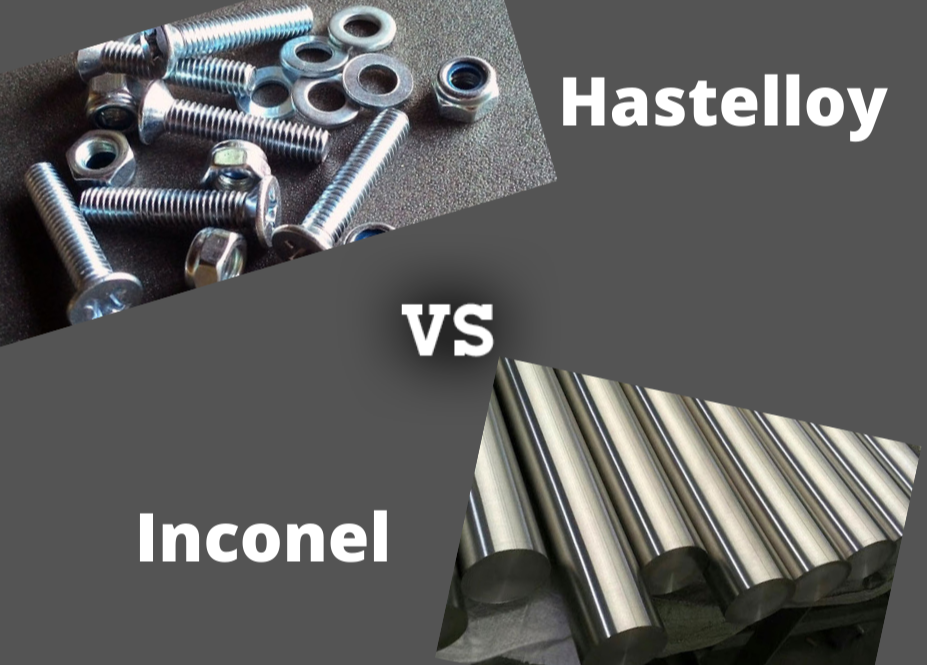
Inconel and Hastelloy are two families of high-performance nickel-based alloys widely used in aerospace, chemical processing, and power generation industries. While both provide excellent resistance to extreme conditions, their composition, design focus, and performance characteristics differ significantly. Understanding these differences is essential for engineers, procurement managers, and metallurgists to select the most suitable alloy for specific applications.
Introduction to Inconel and Hastelloy
Inconel is a nickel-chromium superalloy primarily designed for high-temperature strength and oxidation resistance. Hastelloy, on the other hand, is a nickel-molybdenum-chromium alloy engineered for exceptional corrosion resistance, particularly in highly oxidizing and reducing chemical environments.
History and Brand Background
Inconel
Developed by Special Metals Corporation in the 1940s, Inconel gained popularity in aerospace and gas turbine applications due to its ability to maintain mechanical strength at elevated temperatures.
Hastelloy
Introduced in the 1950s by Haynes International, Hastelloy became a leading choice for chemical process industries where corrosion resistance against acids and chlorides is critical.
Chemical Composition Comparison
- Inconel 718: ~50–55% Ni, 17–21% Cr, 2–3% Mo, 0.65–1.15% Nb, minor Ti and Al
- Hastelloy C-276: ~57% Ni, 16% Cr, 16% Mo, 3–4% Fe, minor W, Co, and Cu
Inconel emphasizes high nickel-chromium content for strength, whereas Hastelloy increases molybdenum and tungsten for corrosion resistance.
Alloy Design Philosophy
Inconel Focus
Optimized for high-temperature mechanical strength, creep resistance, and oxidation protection.
Hastelloy Focus
Optimized for chemical resistance in harsh oxidizing/reducing environments, tolerating strong acids and chlorides.
High-Temperature Performance Comparison
Inconel alloys, such as 718 and 625, retain tensile strength and creep resistance at temperatures up to 700–980°C. Hastelloy alloys have moderate high-temperature strength, sufficient for chemical equipment but generally not for turbine blades.
Oxidation Resistance Comparison
Inconel’s chromium and nickel content form a protective oxide layer, making it excellent for air and gas oxidation at elevated temperatures. Hastelloy has lower high-temperature oxidation resistance but superior chemical stability in reactive fluids.
Corrosion Resistance Comparison
- Inconel: Good resistance to oxidation and moderately aggressive media.
- Hastelloy: Exceptional resistance to strong oxidizing acids (sulfuric, nitric) and chlorides, surpassing Inconel in chemical corrosion environments.
Mechanical Properties Comparison
Tensile and Yield Strength
Inconel 718: Tensile 1240 MPa, Yield 1035 MPa
Hastelloy C-276: Tensile 690 MPa, Yield 283 MPa
Hardness and Ductility
Inconel is harder but Hastelloy is more ductile, facilitating easier forming and welding in chemical equipment.
Creep and Fatigue Resistance Differences
Inconel’s precipitation-hardened grades resist creep and fatigue at elevated temperatures. Hastelloy provides lower creep resistance but remains highly reliable under cyclic chemical exposure at moderate temperatures.
Weldability Comparison
Hastelloy is generally easier to weld due to its low carbon content and high corrosion resistance, reducing post-weld stress corrosion risk. Inconel 718 requires controlled heat treatment and specialized filler metals to maintain mechanical performance after welding.
Machining Performance Comparison
Both alloys are challenging to machine due to work hardening. Inconel is more prone to tool wear during high-temperature machining, while Hastelloy is slightly easier to shape due to its ductility.
Typical Application Differences
- Inconel: Aerospace engine components, gas turbines, high-temperature fasteners, combustion chambers.
- Hastelloy: Chemical reactors, piping, valves, pollution-control equipment, heat exchangers.
Price Difference Analysis
Inconel 718: USD 35–60/kg (industrial grade), higher for aerospace-certified products.
Hastelloy C-276: USD 45–80/kg, reflecting higher molybdenum and tungsten content and corrosion performance.
Common Alloy Grades Comparison
- Inconel 718 vs Hastelloy C-276
- Inconel 625 vs Hastelloy C-22
Selection depends on whether high-temperature strength (Inconel) or corrosion resistance (Hastelloy) is prioritized.
Choosing Between Inconel and Hastelloy Based on Service Conditions
If components operate at high temperatures in oxidizing atmospheres (turbines, aerospace), Inconel is preferred. For exposure to aggressive chemicals, acids, or chlorides, Hastelloy is the superior choice.
Common Misconceptions
Some assume Inconel and Hastelloy are interchangeable. While both are nickel-based, their performance profiles differ significantly. Using Inconel in a highly corrosive chemical environment or Hastelloy in a high-temperature gas turbine can lead to premature failure.
Frequently Asked Questions (FAQ)
Which alloy is better for high-temperature aerospace applications?
Inconel, especially 718 and 625, due to superior high-temperature strength and creep resistance.
Which alloy is better for strong chemical corrosion resistance?
Hastelloy C-22 or C-276, as they resist pitting, crevice corrosion, and stress corrosion in aggressive chemicals.
Can Inconel and Hastelloy be used interchangeably?
No, their properties are optimized for different environments. Selection must consider temperature, chemical exposure, and mechanical requirements.


 English
  Korean
  Japanese
  Arabic
  Spanish
  German
  Portuguese
  French
  Russian
  Italian