

The difference between Monel 400 and Monel K500 is one of the most common questions when selecting nickel-copper alloys for marine, chemical, and offshore environments. Both materials offer excellent corrosion resistance and strong performance in seawater, but Monel K500 provides much higher strength through age hardening. Monel 400 is preferred for easier fabrication and lower cost, while Monel K500 is selected when mechanical strength and wear resistance are critical.
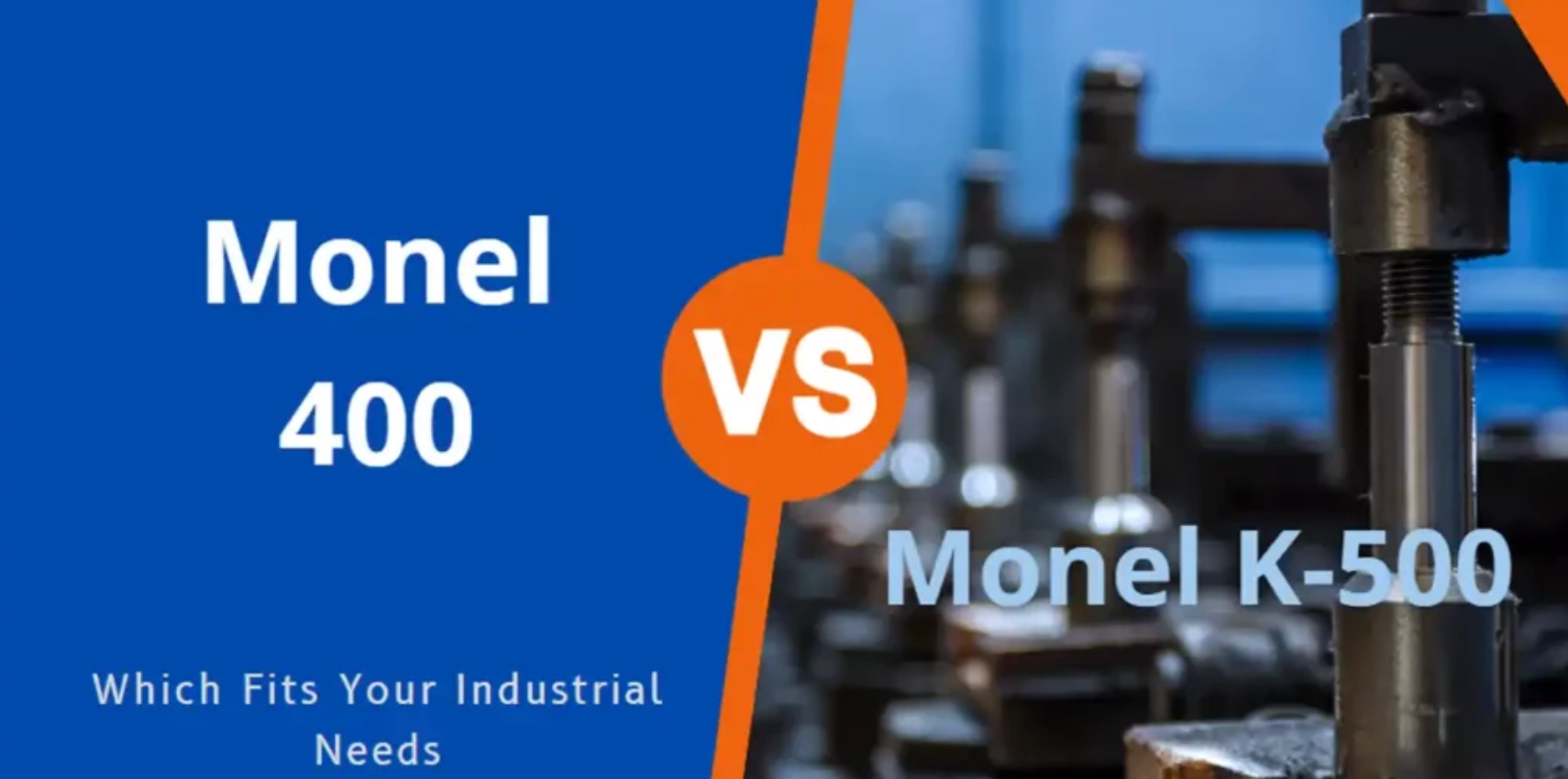
Difference Between Monel 400 and Monel K500 Overview
Monel 400 and Monel K500 belong to the same nickel-copper alloy family. Monel K500 was developed from Monel 400 by adding aluminum and titanium, allowing precipitation hardening for improved strength and hardness.
| Alloy | Main Advantage | Typical Use |
|---|---|---|
| Monel 400 | Corrosion resistance + easier fabrication | Piping, valves, heat exchangers |
| Monel K500 | Higher strength + corrosion resistance | Shafts, fasteners, pump parts |
What Is Monel 400 Alloy (Nickel-Copper Solid Solution Alloy)
Monel 400 is a solid-solution nickel-copper alloy known for excellent resistance to seawater, hydrofluoric acid, alkalis, and many reducing environments. It combines toughness, ductility, and good weldability.
What Is Monel K500 Alloy (Age-Hardenable Nickel-Copper Alloy)
Monel K500 is based on Monel 400 chemistry but includes aluminum and titanium. These additions enable age hardening, which greatly increases tensile strength, yield strength, and hardness.
Chemical Composition Difference Between Monel 400 and Monel K500
| Element | Monel 400 | Monel K500 |
|---|---|---|
| Nickel | High | High |
| Copper | High | High |
| Aluminum | Minimal | Added |
| Titanium | Minimal | Added |
The added aluminum and titanium are the key reason Monel K500 can be age hardened.
Strength and Mechanical Properties Comparison
| Property | Monel 400 | Monel K500 |
|---|---|---|
| Tensile Strength | Good | Much Higher |
| Yield Strength | Moderate | Much Higher |
| Wear Resistance | Moderate | Higher |
| Fatigue Strength | Good | Better |
When mechanical loading is important, Monel K500 is generally the stronger option.
Hardness Difference Between Monel 400 and Monel K500
Monel K500 has substantially higher hardness after aging treatment. Monel 400 remains softer and easier to machine or form.
Corrosion Resistance Comparison in Marine and Chemical Environments
| Environment | Better Choice | Notes |
|---|---|---|
| Seawater | Both Excellent | Common marine use |
| Salt Spray | Both Excellent | Strong atmospheric resistance |
| Reducing Acids | Monel 400 | Often preferred for chemical handling |
| Erosion + Corrosion | Monel K500 | Higher strength advantage |
Both alloys perform very well in marine service, but Monel K500 can be preferred where both corrosion and high stress are present.
High Temperature Performance Comparison
Monel 400 and Monel K500 both perform well at moderate elevated temperatures, but neither is a true high-temperature superalloy like Inconel 718. Strength retention at extreme heat is limited compared with nickel-chromium superalloys.
Low Temperature and Cryogenic Performance Comparison
Both alloys retain toughness at sub-zero temperatures. This makes them suitable for cryogenic valves, pumps, and low-temperature service components.
Machinability and Fabrication Differences
| Factor | Monel 400 | Monel K500 |
|---|---|---|
| Machinability | Difficult | More Difficult |
| Cold Forming | Better | More Limited |
| Tool Wear | Moderate | Higher |
Monel K500 is harder to machine because of increased hardness and strength.
Weldability Comparison of Monel 400 vs Monel K500
Monel 400 is generally easier to weld and fabricate. Monel K500 can be welded, but process control is more important, especially when final aged properties are required.
Typical Applications for Monel 400 and Monel K500
| Application | Preferred Alloy |
|---|---|
| Marine piping | Monel 400 |
| Pump shafts | Monel K500 |
| Heat exchangers | Monel 400 |
| Fasteners | Monel K500 |
| Valve trim | Either depending load |
Cost and Availability Comparison
| Factor | Monel 400 | Monel K500 |
|---|---|---|
| Raw Material Cost | High | Higher |
| Processing Cost | Lower | Higher |
| Availability | Broader | More Limited |
Monel K500 usually costs more because of additional alloying and heat treatment.
Advantages and Limitations of Each Alloy
Monel 400
- Excellent corrosion resistance
- Easier fabrication and welding
- Lower strength than K500
Monel K500
- Much higher strength and hardness
- Excellent marine corrosion resistance
- Higher cost and more difficult machining
How to Choose Between Monel 400 and Monel K500
- Choose Monel 400 for piping, tanks, chemical equipment, and easier fabrication.
- Choose Monel K500 for shafts, fasteners, springs, pump components, and load-bearing marine parts.
- If corrosion resistance is similar but strength matters, K500 is usually better.
Frequently Asked Questions About Monel 400 vs Monel K500
Is Monel K500 stronger than Monel 400?
Yes. Monel K500 is significantly stronger due to age-hardening capability.
Which alloy is better for seawater?
Both are excellent, but Monel K500 is often chosen when higher strength is needed.
Why is Monel K500 more expensive?
Because it contains strengthening elements and requires additional heat treatment processing.


 English
  Korean
  Japanese
  Arabic
  Spanish
  German
  Portuguese
  French
  Russian
  Italian