

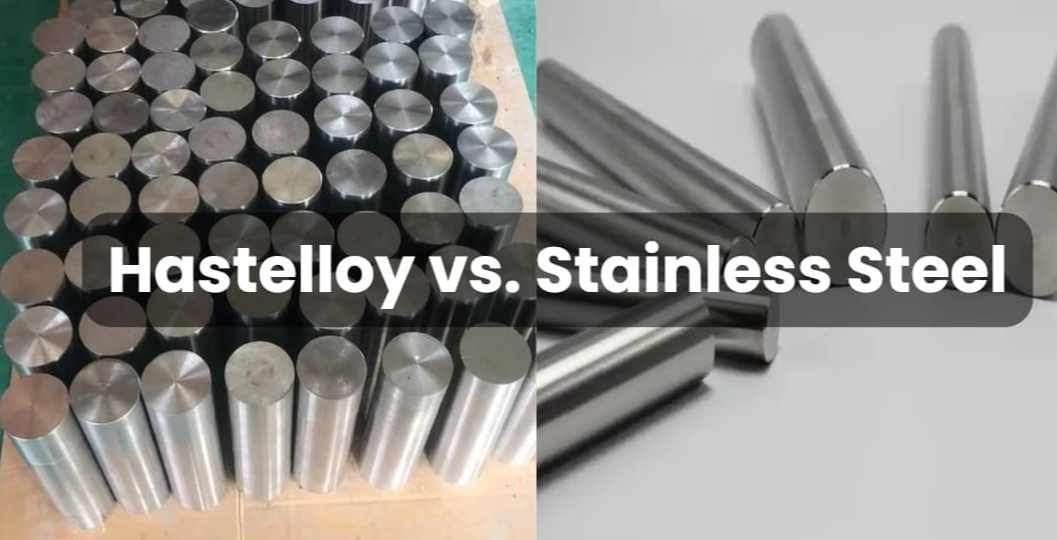
Hastelloy and stainless steel are both widely used alloys, but they are designed for different purposes. Hastelloy is a high-performance nickel-based alloy known for its excellent resistance to corrosion and high temperatures. Stainless steel, while also resistant to corrosion, generally has lower performance in extreme conditions. The primary differences lie in their composition, high-temperature capabilities, corrosion resistance, and cost.
Hastelloy’s Key Composition
Hastelloy is a family of corrosion-resistant alloys primarily based on nickel. The main elements in Hastelloy include nickel, chromium, molybdenum, cobalt, and iron. These elements work together to provide superior corrosion resistance, particularly in aggressive chemical environments such as acids and chlorides.
- Nickel (Ni): The base metal that provides strength and corrosion resistance.
- Chromium (Cr): Enhances oxidation resistance, especially in high-temperature and oxidative environments.
- Molybdenum (Mo): Improves resistance to pitting, crevice corrosion, and chloride-induced stress corrosion cracking.
- Cobalt (Co): Enhances high-temperature strength and creep resistance.
- Iron (Fe): Present in smaller amounts, it improves workability but can slightly decrease corrosion resistance.
Stainless Steel’s Key Composition
Stainless steel is primarily composed of iron, with a minimum of 10.5% chromium content. Other alloying elements like nickel and molybdenum are added to improve its properties. Stainless steel is known for its excellent resistance to oxidation and corrosion in many environments, but it does not perform as well as Hastelloy in more aggressive or extreme conditions.
- Iron (Fe): The main component, providing structure and strength.
- Chromium (Cr): Provides corrosion resistance by forming a protective oxide layer on the surface.
- Nickel (Ni): Enhances formability and improves resistance to corrosion, especially at elevated temperatures.
- Molybdenum (Mo): Improves resistance to corrosion in chloride environments, especially in marine or chemical applications.
- Carbon (C): Increases hardness and strength but too much carbon can make the alloy more prone to corrosion.
Corrosion Resistance Comparison
Hastelloy has significantly better corrosion resistance than stainless steel, especially in highly acidic or chlorinated environments. While stainless steel provides good corrosion resistance in many common environments (like in the food or pharmaceutical industries), it can suffer from pitting or crevice corrosion when exposed to harsh chemicals or seawater.
| Alloy Type | Corrosion Performance |
|---|---|
| Hastelloy | Superior resistance to acids, chloride-induced corrosion, and high-temperature oxidation. |
| Stainless Steel | Good resistance in common environments but prone to pitting and crevice corrosion in aggressive environments. |
High-Temperature Performance Comparison
Hastelloy excels in high-temperature environments. It can withstand temperatures up to 1000°C and beyond, maintaining its strength and oxidation resistance. In contrast, stainless steel has lower high-temperature resistance, typically suitable for temperatures up to 800°C, and its properties degrade quickly at higher temperatures.
| Alloy Type | High-Temperature Performance |
|---|---|
| Hastelloy | Excellent high-temperature strength and oxidation resistance, suitable for extreme conditions. |
| Stainless Steel | Good for temperatures up to 800°C, but performance declines at higher temperatures. |
Welding and Machining Performance Comparison
Hastelloy generally requires more specialized welding techniques due to its tendency to crack or distort under high heat. Stainless steel, on the other hand, is much easier to weld using standard techniques, such as TIG or MIG welding. It is also easier to machine compared to Hastelloy, which can be tough on cutting tools due to its high strength and hardness.
| Alloy Type | Welding Performance | Machining Performance |
|---|---|---|
| Hastelloy | Requires specialized welding techniques to prevent cracking. | Hard to machine, requires special tools and slow cutting speeds to avoid work hardening. |
| Stainless Steel | Easy to weld with standard techniques. | Easy to machine using conventional tools and methods. |
Application Areas Comparison
Hastelloy is ideal for extreme conditions, such as chemical processing, aerospace applications, and nuclear power plants. Stainless steel, however, is more commonly used in construction, food processing, and medical equipment due to its lower cost and adequate performance in many less aggressive environments.
| Alloy Type | Application Areas |
|---|---|
| Hastelloy | Chemical reactors, aerospace components, nuclear power plants, high-temperature industrial applications. |
| Stainless Steel | Construction, food processing, medical devices, household appliances. |
Cost Differences
Hastelloy is much more expensive than stainless steel due to the use of rare and high-performance metals like molybdenum, cobalt, and nickel. Stainless steel, being more widely available and easier to manufacture, is generally much less costly.
Can Hastelloy and Stainless Steel Be Interchanged?
In some applications, Hastelloy and stainless steel can be used interchangeably, but this is generally not recommended. Hastelloy is designed for extreme conditions, while stainless steel is better suited for less demanding environments. Choosing between the two depends on the specific environmental and mechanical requirements of the application.
Frequently Asked Questions (FAQ)
1. What are the main differences between Hastelloy and stainless steel?
The primary differences are in their composition and performance. Hastelloy is a nickel-based alloy designed for high-temperature and highly corrosive environments, while stainless steel is an iron-based alloy that offers good corrosion resistance in less aggressive conditions.
2. Is Hastelloy better than stainless steel for high-temperature applications?
Yes, Hastelloy performs better than stainless steel in high-temperature environments, offering superior strength, oxidation resistance, and stability in extreme heat.
3. Can Hastelloy and stainless steel be used interchangeably?
Generally, no. Hastelloy is specialized for high-performance applications under extreme conditions, while stainless steel is suitable for more common uses where corrosion resistance is needed but high-temperature or aggressive chemical resistance is not a primary concern.


 English
  Korean
  Japanese
  Arabic
  Spanish
  German
  Portuguese
  French
  Russian
  Italian