

Haynes 188 is a cobalt-based superalloy designed for excellent high-temperature strength and oxidation resistance. However, like most high-performance superalloys, it presents machining challenges due to its work-hardening tendency, high strength, and low thermal conductivity. Understanding its machinability is essential for optimizing tool life, improving surface finish, and reducing production costs.
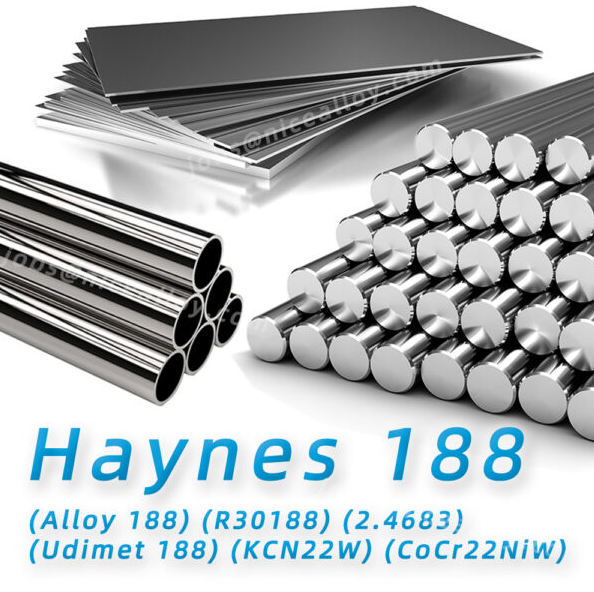
Introduction to Haynes 188 Alloy
Haynes 188 (UNS R30188) is a cobalt-nickel-chromium-tungsten alloy widely used in aerospace and gas turbine applications. It offers outstanding oxidation resistance and thermal stability above 1000°C, but these same properties contribute to machining difficulty.
Overview of Machinability
Haynes 188 has relatively poor machinability compared to conventional steels. It tends to work harden rapidly during cutting, generates high cutting forces, and retains heat at the cutting zone.
Machinability Compared to Other High-Temperature Alloys
| Material | Machinability Rating | Notes |
|---|---|---|
| Carbon Steel | 100% | Baseline reference |
| Stainless Steel | 50–70% | Moderate difficulty |
| Inconel 718 | 20–30% | Difficult |
| Haynes 188 | 15–25% | Very difficult |
| Titanium Alloys | 30–50% | Moderately difficult |
Effect of Hardness and Strength on Machining
The high strength and hardness of Haynes 188 increase cutting forces and accelerate tool wear. This requires the use of rigid machines and high-performance cutting tools.
Effect of Heat Treatment on Machinability
| Condition | Machining Behavior |
|---|---|
| Solution Annealed | Better machinability, lower hardness |
| Aged / Strengthened | More difficult due to higher strength |
Recommended Cutting Speeds and Feed Rates
| Operation | Cutting Speed (m/min) | Feed Rate (mm/rev) |
|---|---|---|
| Turning | 10 – 25 | 0.1 – 0.3 |
| Milling | 8 – 20 | 0.05 – 0.2 |
| Drilling | 5 – 15 | 0.05 – 0.15 |
Tool Selection and Wear Resistance
| Tool Material | Performance |
|---|---|
| Carbide Tools | Preferred for most operations |
| Coated Carbide | Improved wear resistance |
| Ceramic Tools | Used for high-speed finishing |
| High-Speed Steel | Limited use, shorter tool life |
Heat Control During Machining
Due to low thermal conductivity, heat concentrates at the cutting edge. Effective cooling is essential to prevent tool failure and surface damage.
- Use high-pressure coolant systems
- Apply cutting fluids with strong lubrication properties
- Avoid dry cutting in heavy operations
Drilling and Turning Performance
Drilling requires rigid setups and sharp tools to avoid work hardening. Turning operations should maintain consistent feed to prevent tool rubbing.
Milling and Broaching Recommendations
Use climb milling where possible and avoid interrupted cuts. Maintain stable cutting conditions to reduce vibration and tool wear.
Surface Finish and Precision Requirements
Achieving high surface finish requires sharp tools, proper cutting parameters, and controlled vibration. Finishing passes should be light and consistent.
Cold vs Hot Working Performance
| Process | Behavior |
|---|---|
| Cold Working | Significant work hardening |
| Hot Working | Better formability at elevated temperatures |
Common Machining Problems and Solutions
| Problem | Cause | Solution |
|---|---|---|
| Tool Wear | High cutting temperature | Use coated carbide, reduce speed |
| Work Hardening | Low feed rate | Maintain adequate feed |
| Surface Cracks | Thermal stress | Improve cooling |
| Deformation | High cutting force | Use rigid setup |
Comparison with Nickel-Based and Titanium Alloys
| Material | Machining Difficulty | Key Issue |
|---|---|---|
| Haynes 188 | Very High | Heat concentration |
| Inconel 718 | High | Work hardening |
| Titanium Alloy | Moderate | Low thermal conductivity |
Frequently Asked Questions (FAQ)
Is Haynes 188 difficult to machine?
Yes, it is considered a difficult-to-machine superalloy due to work hardening and heat concentration.
What tools are best for machining Haynes 188?
Coated carbide tools are generally recommended for durability and performance.
How can tool life be improved?
By reducing cutting speed, using proper coolant, and maintaining stable cutting conditions.
Can Haynes 188 be machined after heat treatment?
Yes, but machining becomes more difficult after aging due to increased strength.


 English
  Korean
  Japanese
  Arabic
  Spanish
  German
  Portuguese
  French
  Russian
  Italian