

Incoloy alloys are widely used in chemical, petrochemical, and marine environments due to their excellent chemical compatibility with a wide range of corrosive media. As iron-nickel-chromium based alloys, Incoloy grades such as 800, 825, and 925 offer balanced resistance to oxidation, acids, and stress corrosion cracking. Understanding the chemical compatibility of Incoloy alloys is essential for selecting the right material in environments involving acids, chlorides, alkaline solutions, and high temperatures.
Introduction to Incoloy Alloys
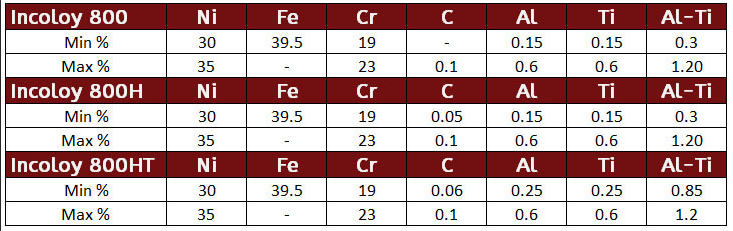
Incoloy alloys belong to the Fe-Ni-Cr alloy family, designed to provide cost-effective corrosion resistance and good mechanical properties at elevated temperatures. Different grades are optimized for specific environments, from high-temperature oxidation (Incoloy 800) to aggressive acid resistance (Incoloy 825).
What is Chemical Compatibility?
Chemical compatibility refers to a material’s ability to resist degradation, corrosion, or chemical reaction when exposed to specific substances. In industrial applications, selecting a material with the correct chemical compatibility ensures long-term reliability and prevents failure due to corrosion.
Overall Corrosion Performance of Incoloy
| Environment Type | Performance |
|---|---|
| Oxidizing environments | Excellent |
| Reducing acids | Good to excellent (especially 825) |
| Chloride environments | Moderate to good |
| High temperature oxidation | Excellent (especially 800) |
Corrosion Resistance Differences Among Incoloy Grades
| Grade | Key Feature | Best Application |
|---|---|---|
| Incoloy 800 | High-temperature oxidation resistance | Furnaces, heat exchangers |
| Incoloy 825 | Acid and chloride resistance | Chemical processing |
| Incoloy 925 | High strength + corrosion resistance | Oil & gas, downhole equipment |
Compatibility with Acidic Media
Sulfuric Acid
Incoloy 825 provides excellent resistance across a wide concentration range, making it suitable for acid handling systems and pickling equipment.
Nitric Acid
Incoloy alloys show good resistance in oxidizing nitric acid environments, particularly due to chromium content.
Phosphoric Acid
Incoloy 825 is highly resistant and widely used in fertilizer and phosphoric acid production systems.
Resistance to Alkaline Environments
Incoloy alloys generally perform well in alkaline solutions such as sodium hydroxide. They exhibit good stability and resistance to caustic corrosion, especially at moderate temperatures.
Performance in Chloride Environments
Incoloy alloys offer moderate resistance to chloride corrosion. While they resist stress corrosion cracking better than stainless steels, they are less resistant to pitting compared to high-molybdenum alloys like Hastelloy.
Resistance to Stress Corrosion Cracking (SCC)
Due to high nickel content, Incoloy alloys—especially 825—have excellent resistance to chloride-induced SCC, making them suitable for environments where stainless steels would fail.
Pitting and Crevice Corrosion Resistance
| Property | Performance |
|---|---|
| Pitting Resistance | Moderate |
| Crevice Corrosion Resistance | Moderate |
| Localized Corrosion Resistance | Good in controlled environments |
Compatibility in Seawater and Salt Spray Environments
Incoloy alloys perform reliably in marine environments, particularly where resistance to stress corrosion cracking is critical. However, for severe pitting conditions, higher alloyed materials may be required.
Effect of Temperature on Chemical Compatibility
As temperature increases, corrosion rates generally accelerate. Incoloy 800 performs well at high temperatures due to its oxidation resistance, while Incoloy 825 maintains corrosion resistance in both moderate and elevated temperatures.
Effect of Concentration on Corrosion Behavior
The concentration of acids or chemicals significantly affects corrosion resistance. Incoloy 825 performs well across a wide concentration range of sulfuric acid, but extreme concentrations may still require more resistant alloys.
Compatibility with Other Materials
| Material | Compatibility with Incoloy |
|---|---|
| Stainless Steel | Compatible; Incoloy offers better SCC resistance |
| Carbon Steel | Less compatible in corrosive environments |
| Nickel Alloys | Generally compatible |
Application Examples in Different Industrial Media
- Chemical processing: acid reactors and pipelines
- Oil & gas: downhole tubing and valves
- Environmental systems: flue gas desulfurization units
- Marine engineering: seawater handling systems
How to Select the Right Incoloy Grade
| Environment | Recommended Grade |
|---|---|
| High temperature oxidation | Incoloy 800 |
| Strong acids | Incoloy 825 |
| High strength + corrosion | Incoloy 925 |
Common Causes of Corrosion Failure
- Incorrect alloy selection
- High chloride concentration leading to pitting
- Excessive temperature beyond design limits
- Poor fabrication or welding practices
Frequently Asked Questions (FAQ)
Is Incoloy suitable for strong acids?
Yes, especially Incoloy 825, which performs well in sulfuric and phosphoric acids.
Does Incoloy resist chloride stress corrosion cracking?
Yes, Incoloy alloys have excellent resistance to SCC compared to stainless steels.
Can Incoloy be used in seawater?
Yes, but for severe pitting conditions, higher alloyed materials may be preferred.
Which Incoloy grade is best for chemical processing?
Incoloy 825 is typically the best choice for aggressive chemical environments.


 English
  Korean
  Japanese
  Arabic
  Spanish
  German
  Portuguese
  French
  Russian
  Italian