

Monel is a high-performance nickel-copper alloy widely recognized for its exceptional resistance to corrosion, particularly in marine and chemical environments. With high nickel content and a solid-solution structure, Monel offers excellent mechanical strength, toughness, and long-term durability across a broad temperature range.
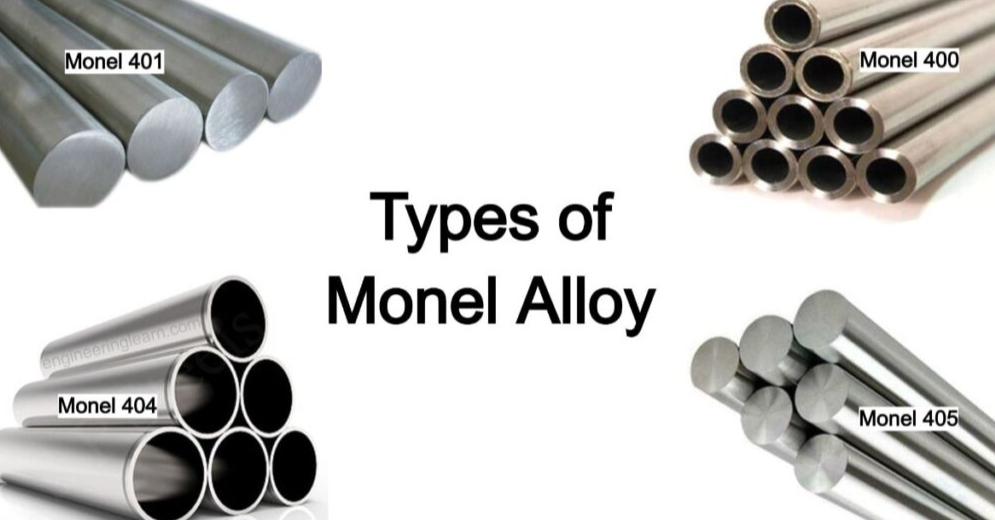
Introduction to Monel Material
Monel is primarily composed of nickel and copper, forming a single-phase solid solution alloy. Unlike many other nickel-based alloys, Monel does not rely on chromium or molybdenum for corrosion resistance. Its unique Ni-Cu composition provides natural resistance to seawater, alkalis, and certain acids.
History and Brand Background of Monel
Historical Development
Monel was developed in the early 1900s by the International Nickel Company (INCO). The alloy was named after Ambrose Monell, then-president of the company.
Trademark and Manufacturer
The Monel trademark is currently owned by Special Metals Corporation, and it remains one of the most recognized nickel alloy families worldwide.
Main Chemical Composition of Monel
- Nickel (Ni): ≥63%
- Copper (Cu): 28–34%
- Iron (Fe): ≤2.5%
- Manganese (Mn): ≤2.0%
- Carbon (C): ≤0.3%
- Silicon (Si): ≤0.5%
The high nickel content ensures corrosion resistance, while copper enhances performance in seawater and hydrofluoric acid environments.
Different Monel Grades
Monel 400 (UNS N04400)
A solid-solution strengthened nickel-copper alloy known for excellent corrosion resistance and good mechanical properties. It is widely used in marine and chemical industries.
Monel K500 (UNS N05500)
A precipitation-hardened version of Monel 400 containing aluminum and titanium. It provides significantly higher strength and hardness while maintaining excellent corrosion resistance.
Effect of Chemical Composition on Performance
The Ni-Cu matrix provides outstanding resistance to seawater, alkalis, and non-oxidizing acids. In Monel K500, the addition of aluminum and titanium enables age hardening, dramatically increasing tensile and yield strength.
Mechanical Properties
Monel 400
- Tensile Strength: ~550 MPa
- Yield Strength: ~240 MPa
- Elongation: ~35%
- Hardness: ~65 HRB
Monel K500
- Tensile Strength: ~1100 MPa
- Yield Strength: ~790 MPa
- Elongation: ~20%
- Hardness: Up to 35 HRC
Physical Properties
- Density: ~8.8 g/cm³
- Melting Range: 1300–1350°C
- Thermal Conductivity: ~21 W/m·K
- Coefficient of Thermal Expansion: ~13.9 µm/m·°C
- Electrical Resistivity: ~0.49 µΩ·m
Corrosion Resistance (Especially in Seawater and Acidic Environments)
Monel demonstrates exceptional resistance to seawater corrosion, including flowing seawater applications. It also performs well in hydrofluoric acid, sulfuric acid under reducing conditions, and alkaline solutions. However, it is less suitable for strongly oxidizing acids such as nitric acid.
Resistance to Stress Corrosion Cracking
Monel 400 exhibits excellent resistance to chloride-induced stress corrosion cracking, making it suitable for marine shafts, pumps, and valves. Monel K500 maintains good resistance while offering higher strength.
High-Temperature Performance
Monel retains mechanical strength up to approximately 480–550°C. While not classified as a superalloy for extreme high-temperature service, it performs reliably in moderately elevated temperatures.
Low-Temperature Performance and Toughness
Monel maintains excellent ductility and impact toughness even at sub-zero temperatures, making it suitable for cryogenic and cold-environment applications.
Machining and Welding Performance
Monel is more difficult to machine than carbon steel due to work hardening tendencies. Proper tooling and lower cutting speeds are recommended. It can be welded using conventional methods such as GTAW and SMAW with matching filler metals.
Heat Treatment Process
- Monel 400: Typically annealed for improved ductility.
- Monel K500: Solution annealed and age hardened to achieve precipitation strengthening.
Common Specifications and Product Forms
- Sheets and Plates
- Round Bars and Rods
- Pipes and Tubes
- Forgings
- Fasteners
Standards and Grade Equivalents
- UNS N04400 – Monel 400
- UNS N05500 – Monel K500
- ASTM B127 – Plate/Sheet
- ASTM B164 – Bar/Rod
- ASTM B165 – Seamless Pipe/Tube
Main Application Fields
- Marine engineering (shafts, propellers, seawater valves)
- Chemical processing equipment
- Oil and gas components
- Heat exchangers
- Pump and valve parts
Difference Between Monel and Inconel / Hastelloy
Monel is primarily a nickel-copper alloy optimized for marine and hydrofluoric acid environments. Inconel (nickel-chromium) is designed for high-temperature strength and oxidation resistance. Hastelloy (nickel-molybdenum-chromium) focuses on extreme corrosion resistance in aggressive chemical environments. Selection depends on whether temperature or corrosion is the dominant factor.
Price Influencing Factors
- Nickel market price fluctuations
- Copper content
- Heat treatment requirements (K500 is more expensive)
- Form and size (forged vs rolled products)
- Certification requirements (NACE, ASTM, aerospace, etc.)
Frequently Asked Questions (FAQ)
Is Monel magnetic?
Monel 400 is generally non-magnetic in the annealed condition, but slight magnetism may appear after cold working.
Is Monel suitable for seawater applications?
Yes. Monel is one of the best materials for long-term seawater exposure.
What is the difference between Monel 400 and K500?
K500 offers significantly higher strength due to precipitation hardening while maintaining similar corrosion resistance.
Can Monel replace stainless steel?
In highly corrosive marine or chemical environments, Monel significantly outperforms most stainless steels.


 English
  Korean
  Japanese
  Arabic
  Spanish
  German
  Portuguese
  French
  Russian
  Italian