

Nickel alloy pipe price is influenced by multiple factors including alloy grade, nickel content, manufacturing process, and global raw material fluctuations. As a critical material in industries such as oil & gas, chemical processing, and aerospace, nickel alloy pipes are valued for their corrosion resistance and high-temperature performance. This guide provides a comprehensive overview of nickel alloy pipe pricing, including average price ranges, differences by grade, and practical tips to obtain competitive quotes in the global market.
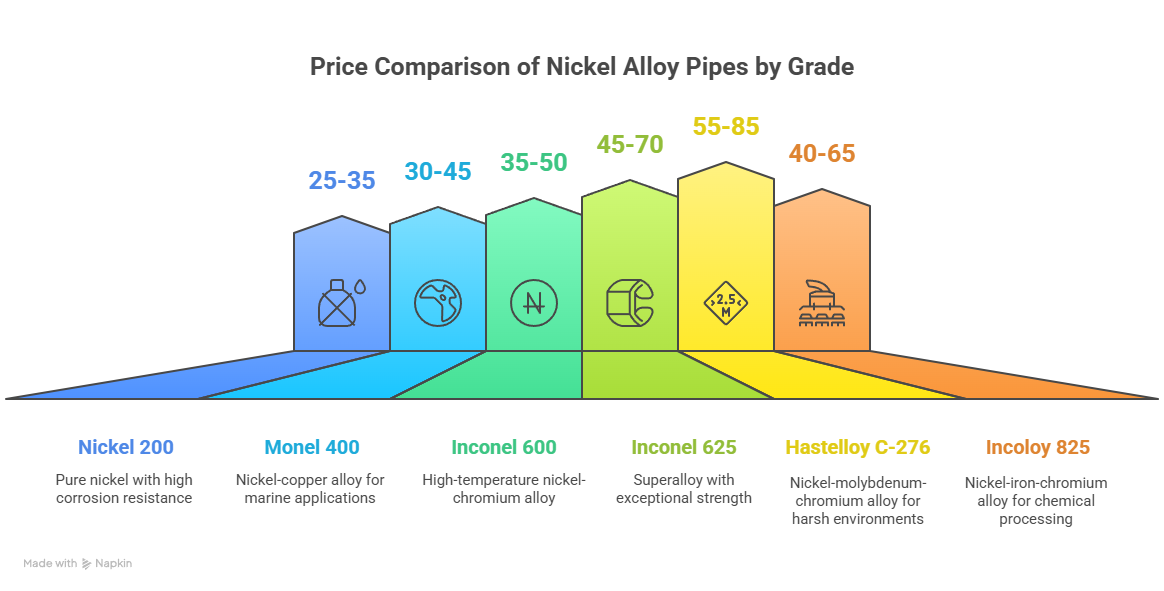
Nickel Alloy Pipe Price Overview
The price of nickel alloy pipes varies significantly depending on composition and production complexity. Compared with stainless steel, nickel alloys are more expensive due to higher raw material costs, especially nickel, cobalt, and molybdenum. Additionally, strict production standards and testing requirements further increase overall costs.
Average Price Range of Nickel Alloy Pipes
| Unit | Price Range | Notes |
|---|---|---|
| Per Kg | $25 – $120 | Depends on grade and processing |
| Per Ton | $25,000 – $120,000 | Bulk industrial pricing |
High-performance alloys such as Hastelloy and Inconel tend to be at the higher end of the price range, while Monel and some Incoloy grades are relatively more affordable.
Price Differences by Alloy Grade
| Alloy Grade | Typical Price Level | Characteristics |
|---|---|---|
| Inconel 625 | High | Excellent corrosion and heat resistance |
| Hastelloy C276 | Very High | Outstanding chemical resistance |
| Monel 400 | Medium | Good seawater corrosion resistance |
| Incoloy 800 | Medium-Low | Good oxidation resistance at lower cost |
Nickel Content Impact on Pipe Price
Nickel is the most expensive component in these alloys. Generally, the higher the nickel content, the higher the price. For example, alloys with over 60% nickel content will cost significantly more than those with 30–40% nickel.
Seamless vs Welded Nickel Alloy Pipe Price Comparison
| Type | Price Level | Features |
|---|---|---|
| Seamless Pipe | Higher | Better strength, no weld seam, more complex production |
| Welded Pipe | Lower | More economical, suitable for less critical applications |
Effect of Pipe Size and Thickness on Pricing
Larger diameters and thicker walls require more raw material and longer processing time, directly increasing the price. Thin-wall pipes are usually more cost-efficient but may not meet high-pressure requirements.
Manufacturing Process and Its Cost Impact
Processes such as hot rolling, cold drawing, and precision machining significantly affect pricing. Cold-drawn pipes usually have higher dimensional accuracy but also higher costs compared to hot-finished pipes.
Raw Material Price Influence
The global nickel market plays a major role in pricing. Nickel prices are highly volatile and directly impact alloy pipe costs. When nickel prices rise sharply, pipe prices follow almost immediately.
Surface Finish and Processing Cost Differences
Surface finishes such as pickled, polished, or bright annealed add additional costs. High-end industries often require stricter surface quality, increasing final pricing.
Certification and Standards Impact
| Standard | Impact on Price |
|---|---|
| ASTM / ASME | Moderate increase due to testing requirements |
| NACE | Higher cost due to stricter corrosion testing |
Regional Price Differences
| Region | Price Level | Reason |
|---|---|---|
| China | Lower | Lower labor and production cost |
| India | Competitive | Growing manufacturing base |
| Europe | High | Strict standards and labor cost |
| USA | High | Quality standards and certifications |
Bulk Order vs Small Quantity Price Differences
Bulk orders usually receive significant discounts due to economies of scale. Small orders, especially below MOQ, often have higher per-unit costs due to setup and production overhead.
Typical Price List for Common Grades
| Grade | Form | Price Range ($/kg) |
|---|---|---|
| Inconel 625 | Seamless Pipe | 80 – 120 |
| Hastelloy C276 | Seamless Pipe | 90 – 130 |
| Monel 400 | Pipe | 35 – 65 |
| Incoloy 800 | Pipe | 25 – 50 |
Tips to Get Competitive Nickel Alloy Pipe Prices
- Compare multiple suppliers from different regions
- Order in bulk whenever possible
- Optimize specifications (avoid over-specification)
- Track nickel market trends before purchasing
- Work directly with manufacturers instead of traders
Frequently Asked Questions About Nickel Alloy Pipe Price
Why are nickel alloy pipes so expensive?
Nickel alloy pipes are expensive mainly due to high raw material costs, especially nickel and molybdenum, as well as complex manufacturing processes and strict quality standards.
Which nickel alloy pipe is the cheapest?
Incoloy 800 and similar low-nickel alloys are usually the most cost-effective options while still offering good performance.
How can I reduce nickel alloy pipe cost?
You can reduce costs by choosing alternative grades, ordering larger quantities, and sourcing from competitive regions like China or India.


 English
  Korean
  Japanese
  Arabic
  Spanish
  German
  Portuguese
  French
  Russian
  Italian