

Nickel alloy seamless pipe price is generally higher than other pipe types due to its superior performance, complex manufacturing process, and high raw material cost. These pipes are widely used in industries such as oil & gas, aerospace, chemical processing, and power generation where reliability under extreme conditions is critical. This guide explains the pricing structure of seamless nickel alloy pipes, including average price ranges, grade-based differences, and key factors that influence cost in the global market.
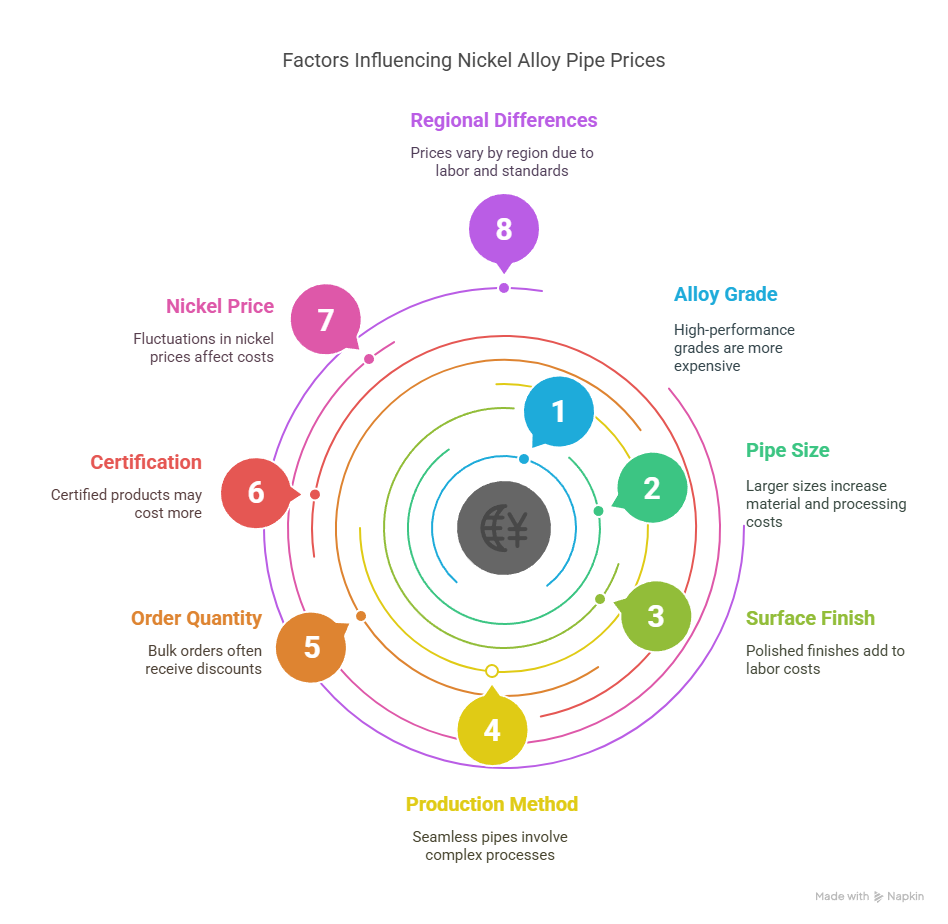
Nickel Alloy Seamless Pipe Price Overview
Seamless nickel alloy pipes are premium products manufactured without welding seams, offering higher strength and better pressure resistance. Because of the advanced production process and strict quality requirements, their price is significantly higher than welded pipes. The final cost depends on alloy grade, dimensions, processing requirements, and certification standards.
Average Price Range of Seamless Nickel Alloy Pipes
| Unit | Price Range | Description |
|---|---|---|
| USD/kg | $40 – $150 | Varies by grade and specification |
| USD/ton | $40,000 – $150,000 | Bulk industrial pricing |
Price by Alloy Grade
| Alloy Grade | Price Level | Key Features |
|---|---|---|
| Inconel 625 | High | Excellent corrosion and oxidation resistance |
| Inconel 718 | High | High strength and creep resistance |
| Hastelloy C276 | Very High | Outstanding chemical corrosion resistance |
| Monel 400 | Medium | Good seawater corrosion resistance |
| Incoloy 800 | Medium-Low | Cost-effective heat resistance |
Seamless vs Welded Pipe Price Comparison
| Type | Price Level | Characteristics |
|---|---|---|
| Seamless Pipe | Higher | No weld seam, higher strength, better pressure resistance |
| Welded Pipe | Lower | Lower cost, suitable for less critical applications |
Why Seamless Pipes Are More Expensive
The higher cost of seamless pipes comes from the complex manufacturing process, higher raw material usage, and stricter inspection requirements. Unlike welded pipes, seamless pipes are produced through extrusion or piercing, which requires advanced equipment and precise control. Additionally, the rejection rate is higher, contributing to increased production costs.
Nickel Content Impact on Seamless Pipe Cost
Nickel is the most expensive element in these alloys. Higher nickel content directly leads to higher prices. For example, Inconel and Hastelloy grades with high nickel percentages are significantly more expensive than lower-nickel alloys such as Incoloy.
Manufacturing Process and Cost Impact
Extrusion and Piercing
| Process | Cost Impact | Description |
|---|---|---|
| Extrusion | High | Ensures uniform structure and high strength |
| Piercing | High | Complex process requiring precise temperature control |
These processes demand advanced machinery and skilled operation, which significantly increase production costs compared to welded pipes.
Pipe Size and Wall Thickness Effect on Price
Larger diameters and thicker walls increase material consumption and processing time, leading to higher costs. Custom sizes further increase pricing due to additional setup and tooling requirements.
Surface Finish and Heat Treatment Cost Differences
Surface finishes such as pickling, polishing, or bright annealing add additional costs. Heat treatment processes like solution annealing improve performance but also increase production expenses. High-end applications often require both, further raising the final price.
Certification and Standards Cost Impact
| Standard | Impact on Cost |
|---|---|
| ASTM / ASME | Moderate increase due to inspection and testing |
| PED | Higher cost due to European compliance requirements |
| NACE | Additional cost for corrosion-resistant certification |
Global Nickel Price Influence
The price of nickel on the global market, especially the London Metal Exchange (LME), directly impacts seamless pipe pricing. When nickel prices rise, alloy pipe prices increase accordingly. Monitoring LME trends is essential for buyers aiming to control costs.
Regional Price Differences
| Region | Price Level | Reason |
|---|---|---|
| China | Lower | Cost-effective manufacturing and supply chain |
| India | Competitive | Growing export capabilities |
| Europe | High | Strict standards and labor cost |
| USA | High | Certification and quality requirements |
Typical Price List for Common Grades
| Grade | Specification | Price Range ($/kg) |
|---|---|---|
| Inconel 625 | Seamless Pipe | 90 – 140 |
| Inconel 718 | Seamless Pipe | 95 – 150 |
| Hastelloy C276 | Seamless Pipe | 100 – 160 |
| Monel 400 | Seamless Pipe | 45 – 75 |
Bulk Order vs Small Quantity Price Differences
Bulk orders significantly reduce unit price due to economies of scale, while small quantity orders usually carry higher costs due to production setup, tooling, and logistics expenses.
How to Get the Best Seamless Pipe Price from Suppliers
- Compare quotations from multiple manufacturers
- Choose the most suitable alloy grade for your application
- Order in bulk to reduce unit cost
- Track nickel market trends before purchasing
- Work directly with reliable manufacturers
Frequently Asked Questions About Nickel Alloy Seamless Pipe Price
Why are seamless nickel alloy pipes more expensive than welded pipes?
Seamless pipes require more complex manufacturing processes such as extrusion and piercing, use more raw material, and undergo stricter quality inspection, which increases the overall cost.
Which nickel alloy seamless pipe is the most cost-effective?
Incoloy 800 and similar lower-nickel alloys are generally more cost-effective while still providing good high-temperature performance.
How can I reduce seamless pipe purchasing costs?
You can reduce costs by selecting appropriate grades, ordering in bulk, and sourcing from competitive manufacturing regions such as China or India.


 English
  Korean
  Japanese
  Arabic
  Spanish
  German
  Portuguese
  French
  Russian
  Italian