

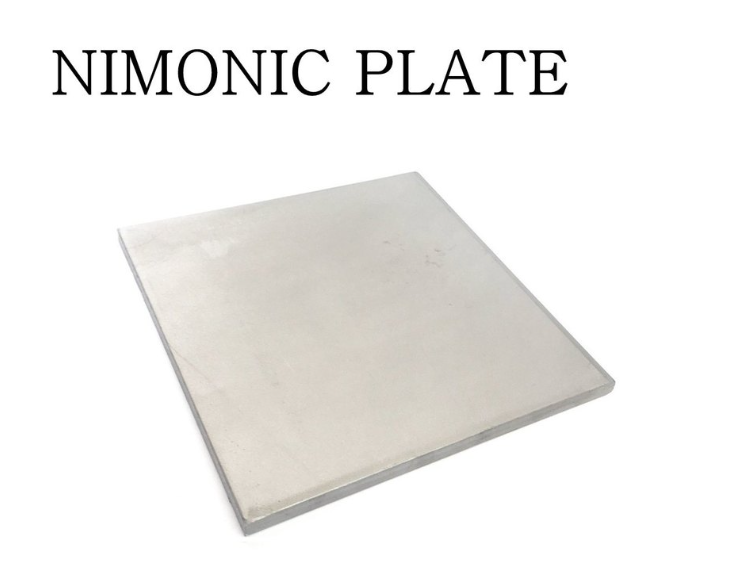
Nimonic plate refers to a group of nickel-based superalloy sheets and plates designed for high-temperature environments requiring excellent oxidation resistance, creep strength, and structural stability. These plates are widely used in aerospace, gas turbines, and industrial heating equipment where materials must perform reliably under extreme conditions.
Introduction to Nimonic Alloys
Nimonic alloys are nickel-chromium-based superalloys developed for high-temperature service. Depending on the grade, they may be strengthened by solid solution or precipitation hardening (typically using aluminum and titanium). These alloys are known for their excellent resistance to oxidation, creep, and fatigue.
Nimonic Plate Types and Features
| Type | Characteristics |
|---|---|
| Hot Rolled Plate | Good mechanical properties, suitable for thick sections |
| Cold Rolled Sheet | High surface finish and dimensional accuracy |
| Precision Plate | Tight tolerances for aerospace applications |
Common Nimonic Plate Grades
Several Nimonic grades are available in plate form, each designed for specific temperature and stress conditions.
| Grade | Main Features | Typical Applications |
|---|---|---|
| Nimonic 75 | Excellent oxidation resistance | Furnace parts, heat shields |
| Nimonic 80A | Precipitation hardened, high strength | Turbine components |
| Nimonic 90 | Higher creep resistance | Aerospace engine parts |
Performance Differences Between Grades
Nimonic 75 focuses on oxidation resistance and ductility, while Nimonic 80A and 90 provide higher strength and creep resistance due to precipitation hardening. The selection depends on temperature and stress requirements.
Chemical Composition Characteristics of Nimonic Plate
Nimonic plates are primarily composed of nickel and chromium, with additional elements such as aluminum and titanium in precipitation-hardened grades. These elements contribute to high-temperature strength and oxidation resistance.
High-Temperature Performance
Nimonic plates maintain excellent mechanical properties at elevated temperatures, typically up to 800–1000°C depending on the grade. They resist deformation and maintain structural integrity during long-term service.
Oxidation and Corrosion Resistance
The chromium content in Nimonic alloys forms a protective oxide layer, preventing oxidation and scaling. While not as corrosion-resistant as some nickel-molybdenum alloys, Nimonic plates still perform well in oxidizing environments.
Production Process of Nimonic Plate
Nimonic plates are produced through hot rolling or cold rolling processes depending on thickness and application requirements.
| Process | Description |
|---|---|
| Hot Rolling | Used for thicker plates with good mechanical strength |
| Cold Rolling | Provides better surface finish and tighter tolerances |
Effect of Heat Treatment on Nimonic Plate
Heat treatment plays a critical role in achieving the desired mechanical properties. Precipitation-hardened grades undergo solution treatment followed by aging to enhance strength and creep resistance.
Common Sizes and Thickness Range
| Product Form | Thickness Range | Width |
|---|---|---|
| Sheet | 0.5 – 6 mm | Up to 1500 mm |
| Plate | 6 – 100 mm | Up to 2500 mm |
Surface Condition and Delivery State
| Surface Type | Description |
|---|---|
| Hot Rolled | Oxide scale surface |
| Pickled | Cleaned surface after acid treatment |
| Polished | Smooth surface for precision applications |
Standards and Certifications
| Standard | Description |
|---|---|
| BS | British standard for Nimonic alloys |
| AMS | Aerospace material specifications |
| EN | European standards |
Typical Applications
- Aerospace engine components
- Gas turbine parts
- Industrial heating equipment
- Heat shields and furnace components
- High-temperature structural parts
Comparison Between Nimonic Plate and Inconel Plate
| Feature | Nimonic Plate | Inconel Plate |
|---|---|---|
| Main focus | High-temperature strength and creep resistance | Corrosion resistance and versatility |
| Strength at high temperature | Excellent (especially 80A, 90) | Very good |
| Corrosion resistance | Moderate | Excellent |
| Typical industries | Aerospace, turbines | Chemical, oil & gas, aerospace |
Procurement and Material Selection Tips
When selecting Nimonic plates, it is important to consider service temperature, mechanical load, required standards, and fabrication requirements. Choosing the correct grade ensures optimal performance and cost efficiency.
Frequently Asked Questions (FAQ)
What is Nimonic plate mainly used for?
Nimonic plates are mainly used in aerospace, gas turbines, and high-temperature industrial equipment.
Which Nimonic grade is best for high strength?
Nimonic 80A and Nimonic 90 provide higher strength due to precipitation hardening.
Is Nimonic plate suitable for corrosive environments?
It offers good oxidation resistance but is less resistant to strong acids compared to alloys like Hastelloy.


 English
  Korean
  Japanese
  Arabic
  Spanish
  German
  Portuguese
  French
  Russian
  Italian