

Rene 41 is a nickel-based superalloy developed for high-temperature structural applications, particularly in aerospace and gas turbine engines. It offers exceptional high-temperature strength, creep resistance, and fatigue durability, making it ideal for turbine blades, discs, and other critical engine components.
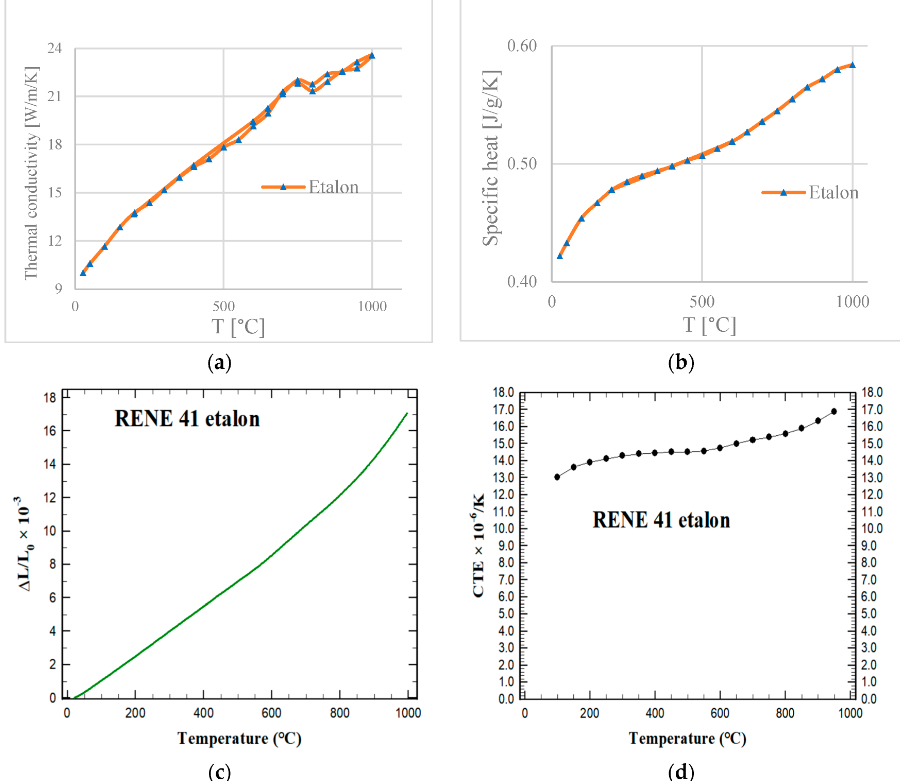
Overview of Rene 41 Alloy
Rene 41 is strengthened primarily by cobalt, molybdenum, aluminum, and titanium additions, giving it excellent mechanical properties at temperatures up to 760°C – 870°C. Its combination of creep resistance and oxidation resistance enables long-term service under extreme conditions.
Chemical Composition
| Element | Content (%) |
|---|---|
| Nickel (Ni) | Bal. |
| Cobalt (Co) | 13 – 16 |
| Chromium (Cr) | 7 – 10 |
| Molybdenum (Mo) | 2.5 – 3.5 |
| Aluminum (Al) | 3.2 – 3.8 |
| Titanium (Ti) | 2.0 – 2.6 |
| Carbon (C) | 0.06 – 0.10 |
| Iron (Fe) | ≤ 2.0 |
Role of Major Alloying Elements
- Nickel (Ni): Base metal providing corrosion resistance and high-temperature stability.
- Cobalt (Co): Enhances high-temperature strength and oxidation resistance.
- Chromium (Cr): Improves oxidation and corrosion resistance.
- Molybdenum (Mo): Increases creep strength and high-temperature durability.
- Aluminum (Al) and Titanium (Ti): Form γ′ precipitates for precipitation hardening and creep resistance.
High-Temperature Strength and Creep Resistance
Rene 41 maintains high tensile and yield strength even at 760°C – 870°C. Its creep resistance ensures dimensional stability over long service periods in gas turbines and jet engines.
Oxidation and Corrosion Resistance
The combination of chromium and cobalt provides strong oxidation protection. Rene 41 resists hot corrosion and maintains surface integrity in combustion environments, although it is less resistant to aggressive chemical attack than Hastelloy alloys.
Mechanical Properties
| Property | Value |
|---|---|
| Ultimate Tensile Strength (RT) | 1100 – 1300 MPa |
| Yield Strength (0.2% offset) | 690 – 860 MPa |
| Elongation | 10 – 20% |
| Hardness (HRB) | 85 – 92 |
Physical Properties
| Property | Value |
|---|---|
| Density | 8.25 g/cm³ |
| Melting Range | 1300 – 1360°C |
| Thermal Conductivity | 11.0 W/m·K |
| Coefficient of Thermal Expansion | 13.0 × 10⁻⁶ /°C |
| Specific Heat | 435 J/kg·K |
High-Temperature Fatigue Performance
Rene 41 exhibits excellent fatigue resistance at elevated temperatures, making it suitable for turbine blades and other cyclic-loading components.
Heat Treatment Effects
Solution treatment followed by aging promotes γ′ precipitation, enhancing high-temperature strength, creep resistance, and fatigue performance.
Machining and Welding Performance
Rene 41 is difficult to machine due to its high strength and work hardening behavior. Specialized tooling and coolant are required. Welding requires preheating and post-weld heat treatment to avoid cracking and preserve mechanical properties.
Common Product Forms and Specifications
- Plate
- Round Bar
- Forged Components
- Typical Dimensions: Diameter 10 – 150 mm, Plate thickness 5 – 50 mm
Comparison with Inconel and Nimonic Alloys
| Alloy | High-Temperature Strength | Creep Resistance | Primary Application |
|---|---|---|---|
| Rene 41 | Very High | Excellent | Gas turbines, jet engine blades |
| Inconel 718 | High | Good | Aerospace components, fasteners |
| Nimonic 80A | Moderate | Good | Industrial heating, engines |
Typical Applications
- Aerospace turbine discs and blades
- Gas turbine hot-section components
- Industrial high-temperature rotating machinery
- Turbochargers and nozzles
Frequently Asked Questions (FAQ)
What is the maximum service temperature for Rene 41?
Approximately 870°C, depending on load and environment.
How does Rene 41 compare to Inconel 718?
Rene 41 offers higher creep strength and high-temperature performance, while Inconel 718 is more versatile and easier to machine.
Is Rene 41 suitable for welding?
Yes, but preheating and post-weld heat treatment are required due to risk of cracking.
What are common forms of Rene 41?
Plates, round bars, and forged components are the most common product forms.


 English
  Korean
  Japanese
  Arabic
  Spanish
  German
  Portuguese
  French
  Russian
  Italian