

Rene 41 is a high-performance nickel-based superalloy widely used in aerospace, gas turbines, and other high-temperature applications. Its unique high-temperature strength, creep resistance, and fatigue durability make it highly valuable, which is reflected in its price per pound. This article examines the factors affecting Rene 41 pricing, typical price ranges, and comparisons with other superalloys.
Rene 41 Alloy Price Overview
The price of Rene 41 varies depending on product form, specification, quantity, and global nickel and cobalt market fluctuations. Aerospace-grade Rene 41 is generally more expensive than industrial-grade due to stricter quality controls and certifications.
Price Per Pound Range
As of 2026, the typical market price for Rene 41 ranges from approximately $45 to $75 per pound, depending on the product form and certification level. Prices can vary significantly based on supplier, order size, and market demand.
Industrial vs Aerospace Grade
- Industrial Grade: Suitable for high-temperature rotating machinery and general engineering components. Lower certification requirements make it slightly less expensive.
- Aerospace Grade: Meets AMS, ASTM, and UNS standards for critical engine components. Price is higher due to testing, traceability, and tighter quality control.
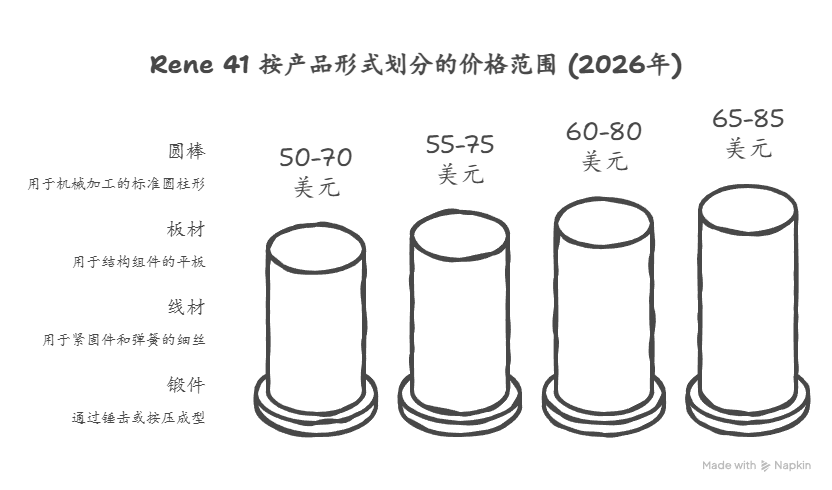
Price Variation by Product Form
| Product Form | Approx. Price Per Pound |
|---|---|
| Round Bar | $50 – $70 |
| Plate | $55 – $75 |
| Wire | $60 – $80 |
| Forging | $65 – $85 |
Impact of Size and Specification
Larger diameters and custom dimensions often increase price due to additional material, machining, and quality inspection requirements. Tight tolerances also contribute to higher costs.
Raw Material Influence
The cost of nickel, cobalt, chromium, and molybdenum directly impacts Rene 41 pricing. As nickel and cobalt prices fluctuate, suppliers adjust their selling prices accordingly.
Regional Price Differences
Prices vary across regions due to shipping costs, tariffs, and local supply-demand dynamics:
- China: Often lower base price, but limited aerospace-grade availability
- USA: Higher due to aerospace certification and labor costs
- Europe: Prices may be higher because of stringent environmental and quality regulations
Certification and Standards
AMS and ASTM certified Rene 41 is priced higher due to additional testing and documentation requirements. Industrial applications may not require full aerospace certification, allowing for cost savings.
Bulk vs Small Orders
Large-volume purchases receive significant per-pound discounts, while small orders or rush orders often carry premiums.
Comparison with Other Superalloys
| Alloy | Typical Price Per Pound | Comments |
|---|---|---|
| Rene 41 | $45 – $75 | High-temperature strength, aerospace applications |
| Inconel 718 | $35 – $55 | Widely used, easier machining |
| Nimonic 90 | $50 – $70 | Excellent creep resistance, spring applications |
Future Price Trends and Market Forecast
Rene 41 prices are expected to remain stable to slightly increase in 2026 due to steady demand in aerospace and energy sectors, combined with potential fluctuations in nickel and cobalt markets.
Procurement Considerations
- Verify supplier certification and traceability
- Compare prices from multiple suppliers to ensure competitiveness
- Consider bulk purchasing for cost efficiency
- Account for shipping, import duties, and local taxes
Frequently Asked Questions (FAQ)
What factors most affect Rene 41 price per pound?
Raw material costs (nickel, cobalt), product form, certification level, and order quantity are the primary factors.
How does Rene 41 pricing compare to Inconel 718?
Rene 41 is generally 10–30% more expensive due to higher high-temperature performance and stricter aerospace-grade certification requirements.
Can bulk orders reduce the per-pound cost?
Yes, purchasing larger quantities usually results in significant discounts per pound compared to small orders.


 English
  Korean
  Japanese
  Arabic
  Spanish
  German
  Portuguese
  French
  Russian
  Italian