

Alloy 200 Sheet, also known as Nickel 200 Sheet, UNS N02200 Sheet, or W.Nr. 2.4066 Sheet, is a commercially pure nickel sheet material widely used in chemical processing, electrical components, battery parts, marine equipment, caustic alkali handling, food processing, and industrial manufacturing. It is valued for high nickel purity, excellent resistance to many corrosive environments, strong resistance to caustic alkalis, good thermal conductivity, good electrical conductivity, low gas content, good ductility, and reliable fabrication performance. For buyers, Alloy 200 Sheet is not only a nickel sheet product; it must be selected according to grade, chemical composition, thickness, width, length, temper, surface finish, standard, inspection requirement, and application temperature. This article explains Nickel Alloy 200 Sheet overview, grade identification, chemical composition, key properties, corrosion resistance, electrical and thermal conductivity, mechanical properties, common sheet sizes, cold rolled and hot rolled conditions, annealed supply, surface finish options, standards, applications, comparison with Nickel 201 Sheet, price factors, stock availability, lead time, and related questions.
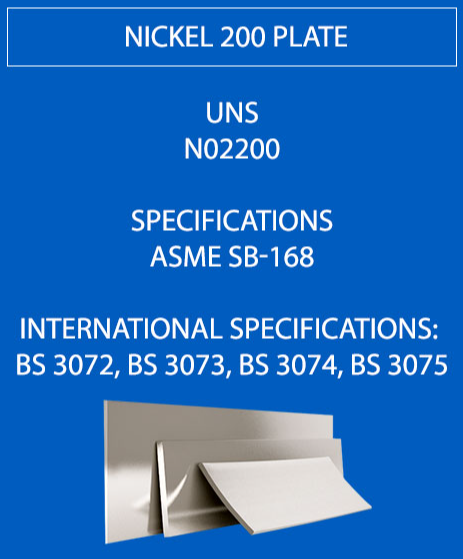
Nickel Alloy 200 Sheet Overview
Nickel Alloy 200 Sheet is a commercially pure wrought nickel sheet with high nickel content. It is commonly supplied as thin sheet, coil sheet, cut sheet, plate, strip, foil, shim sheet, and custom-cut flat material. Because of its pure nickel structure, Alloy 200 Sheet provides a useful combination of corrosion resistance, electrical conductivity, thermal conductivity, formability, and weldability.
In many industrial projects, Alloy 200 Sheet is selected when stainless steel does not provide enough resistance to caustic alkalis or when higher electrical and thermal conductivity is required. It is also used when product purity is important, because high-purity nickel can reduce contamination risk in selected chemical, food, and process equipment applications.
Main Reasons Buyers Choose Alloy 200 Sheet
| Buyer Requirement | Why Alloy 200 Sheet Is Used | Typical Industry |
|---|---|---|
| High nickel purity | Commercially pure nickel provides stable material performance. | Chemical, food processing, battery, and electrical industries. |
| Caustic alkali resistance | Nickel 200 performs well in many alkali handling environments. | Caustic soda, chemical tanks, process vessels. |
| Electrical conductivity | Pure nickel provides better conductivity than many nickel alloys. | Battery tabs, electrical contacts, electronic parts. |
| Thermal conductivity | Good heat transfer performance for selected thermal parts. | Heat exchangers, thermal shields, industrial equipment. |
| Formability | Annealed sheet can be formed, drawn, spun, and fabricated. | Stamped parts, formed covers, industrial sheet parts. |
What Is Alloy 200 Sheet?
Alloy 200 Sheet is a flat-rolled nickel sheet product made from Nickel 200, a commercially pure nickel grade. It is usually supplied with nickel content around 99% minimum or higher, depending on the standard and supplier certificate. The material is solid-solution strengthened and does not rely on precipitation hardening like Inconel 718 or age-hardenable nickel alloys.
Alloy 200 Sheet is usually chosen for environments below about 315°C / 600°F. For higher-temperature service, Nickel 201 Sheet is often preferred because it has lower carbon content and better resistance to graphitization-related embrittlement at elevated temperature. This difference is one of the most important points buyers should understand when comparing Alloy 200 Sheet and Nickel 201 Sheet.
Alloy 200 Sheet Is Not Stainless Steel
Although Alloy 200 Sheet may look similar to stainless steel sheet, it is a nickel material, not an iron-based stainless steel. It has much higher nickel content and different corrosion, conductivity, magnetism, forming, and cost behavior. Buyers should not compare Alloy 200 Sheet directly with 304 stainless steel sheet or 316 stainless steel sheet only by thickness and size.
Alloy 200 UNS N02200 / W.Nr. 2.4066 Grade Identification
Alloy 200 Sheet may be listed under different names in drawings, quotations, certificates, and supplier catalogs. The most common names include Nickel 200, Alloy 200, UNS N02200, W.Nr. 2.4066, W.Nr. 2.4060, and Ni 99.2.
| Name / Designation | Meaning | Where It Is Commonly Used |
|---|---|---|
| Alloy 200 | Commercial alloy name | Supplier quotations and product pages. |
| Nickel 200 | Common grade name | Material datasheets and buyer inquiries. |
| UNS N02200 | Unified Numbering System designation | International procurement and material certificates. |
| W.Nr. 2.4066 | German material number | European drawings and technical references. |
| W.Nr. 2.4060 | Related European material reference | May appear in Nickel 200 / 201 cross-reference tables. |
| Ni 99.2 | Nickel purity-style designation | Used in some European or commercial references. |
Why Grade Identification Matters
Alloy 200 Sheet should not be confused with Nickel 201 Sheet, Inconel 600 Sheet, Monel 400 Sheet, or Nickel Alloy 625 Sheet. These materials are all nickel-based or nickel-containing materials, but they have different chemical composition, corrosion behavior, conductivity, temperature limit, and price. If a drawing requires UNS N02200, the supplier should provide Alloy 200 Sheet that matches the required standard and material certificate.
Alloy 200 Sheet Chemical Composition
The chemical composition of Alloy 200 Sheet is simple compared with many nickel-based superalloys. Its main element is nickel, with small controlled amounts of iron, manganese, carbon, silicon, copper, and sulfur. The high nickel content is the reason for its corrosion resistance, conductivity, ductility, and magnetic behavior.
| Element | Typical Requirement | Function in Alloy 200 Sheet |
|---|---|---|
| Nickel (Ni) | Min. 99.0% | Main element; provides corrosion resistance, conductivity, and nickel purity. |
| Carbon (C) | Max. 0.15% | Controlled to maintain material behavior; higher than Nickel 201 carbon limit. |
| Manganese (Mn) | Max. 0.35% | Controlled minor element for processing and quality. |
| Iron (Fe) | Max. 0.40% | Controlled residual element. |
| Silicon (Si) | Max. 0.35% | Controlled to maintain material cleanliness and processing quality. |
| Copper (Cu) | Max. 0.25% | Controlled residual element. |
| Sulfur (S) | Max. 0.01% | Kept low to improve workability and reduce harmful inclusions. |
Why High Nickel Purity Is Important
High nickel purity gives Alloy 200 Sheet its main performance advantages. It supports corrosion resistance in many neutral, alkaline, and reducing environments. It also gives the sheet good electrical and thermal conductivity compared with many alloyed nickel materials. For applications such as battery parts, electrical components, chemical tanks, and caustic alkali equipment, nickel purity is a key buying factor.
Why Carbon Content Should Be Checked
The carbon content of Alloy 200 is higher than Nickel 201. This is why Alloy 200 is generally preferred for lower-temperature applications, while Nickel 201 is usually selected for higher-temperature service above about 315°C / 600°F. If the working temperature is high, buyers should confirm whether Alloy 200 Sheet is acceptable or whether Nickel 201 Sheet is required.
Key Properties of Nickel Alloy 200 Sheet
Nickel Alloy 200 Sheet is valued for corrosion resistance, high purity, good electrical conductivity, good thermal conductivity, ductility, weldability, and good fabrication performance. It is not selected for very high strength like Inconel 718, and it is not selected for severe chloride corrosion like Inconel 625. It is selected when commercially pure nickel properties are required.
| Property | Performance Meaning | Practical Benefit |
|---|---|---|
| Commercially pure nickel | High nickel content with limited alloying elements. | Suitable for purity-sensitive process equipment. |
| Good corrosion resistance | Performs well in many alkalis, neutral salts, and reducing environments. | Useful for chemical and caustic handling equipment. |
| High electrical conductivity | Better conductivity than many nickel alloys. | Useful for battery tabs, electrical contacts, and conductive parts. |
| Good thermal conductivity | Transfers heat better than many high-alloy nickel materials. | Useful for heat transfer and thermal management parts. |
| Good ductility | Can be cold formed, drawn, spun, and fabricated. | Suitable for stamped and formed sheet components. |
| Weldability | Can be welded with proper procedures. | Suitable for tanks, trays, covers, and fabricated assemblies. |
| Magnetic properties | Nickel 200 is magnetic at room temperature. | Relevant for electrical, magnetic, and instrument applications. |
Performance Depends on Condition
Alloy 200 Sheet can be supplied in annealed, cold rolled, hot rolled, hard, half-hard, soft, or custom temper conditions depending on supplier capability and standard. Mechanical properties, hardness, formability, and surface quality depend strongly on the delivered condition.
Corrosion Resistance of Alloy 200 Sheet
Corrosion resistance is one of the main reasons buyers choose Alloy 200 Sheet. It performs especially well in many alkaline environments, neutral salts, and reducing conditions. It is often used in caustic soda handling, alkali production, food processing equipment, chemical tanks, and processing systems where product purity is important.
Resistance to Caustic Alkalis
Alloy 200 Sheet has excellent resistance to caustic alkalis across many concentrations and temperatures. This makes it a common material for caustic soda evaporators, alkali storage equipment, tanks, trays, and process components. In these environments, stainless steel may not always provide the same reliability.
Neutral and Reducing Media
Nickel 200 also performs well in many neutral and reducing media. It has low corrosion rates in neutral and distilled water under suitable conditions. This makes it useful in selected chemical processing and purity-sensitive equipment.
Limitations in Oxidizing Environments
Alloy 200 Sheet is not the best choice for strongly oxidizing acids or oxidizing chloride environments. If the service involves strong oxidizers, acidic chlorides, seawater with high stress, or aggressive mixed acids, buyers may need to consider other nickel alloys such as Alloy 625, Alloy 400, Alloy C-276, or other corrosion-resistant grades.
| Environment | Alloy 200 Sheet Performance | Selection Note |
|---|---|---|
| Caustic alkalis | Excellent in many conditions. | One of the strongest application areas for Nickel 200. |
| Neutral salts | Good resistance in many neutral salt environments. | Confirm concentration and temperature. |
| Distilled and neutral water | Low corrosion rates under suitable conditions. | Useful for purity-sensitive systems. |
| Reducing acids | Can perform well in selected deaerated reducing conditions. | Confirm acid type, concentration, and aeration. |
| Strong oxidizing acids | Usually not the preferred choice. | Consider more corrosion-resistant nickel alloys. |
| High-temperature service above 315°C / 600°F | Nickel 201 is often preferred. | Carbon content becomes important. |
Electrical and Thermal Conductivity Performance
Alloy 200 Sheet has good electrical and thermal conductivity compared with many nickel-based alloys. This is one reason it is used in electrical components, battery parts, conductive strips, terminals, current collectors, and heat transfer parts.
Electrical Conductivity
Because Alloy 200 is commercially pure nickel, it has better electrical conductivity than many heavily alloyed nickel materials. It is commonly used for battery tabs, electrical contacts, electronic components, conductive connectors, and nickel sheet parts that must carry current while also resisting corrosion.
Thermal Conductivity
Alloy 200 Sheet also has useful thermal conductivity. It may be used in heat transfer components, thermal shields, heating equipment, and industrial parts where both heat transfer and corrosion resistance are required.
Why Conductivity Is Better Than Many Nickel Alloys
When nickel is heavily alloyed with chromium, molybdenum, niobium, or cobalt, electrical and thermal conductivity usually decreases. Because Alloy 200 has high nickel purity and limited alloying elements, it can provide better conductivity than many complex nickel superalloys.
| Conductivity Requirement | Why Alloy 200 Sheet Is Suitable | Typical Product |
|---|---|---|
| Battery current collection | Good conductivity and nickel purity. | Nickel tabs, strips, foils, stamped parts. |
| Electrical contact parts | Conductive and corrosion-resistant surface. | Contacts, terminals, connectors. |
| Thermal transfer parts | Good thermal conductivity compared with many nickel alloys. | Heat transfer sheets, shields, equipment parts. |
| Electronic components | Low gas content and stable nickel performance. | Electronic nickel sheet components and precision parts. |
Alloy 200 Sheet Mechanical Properties
Mechanical properties of Alloy 200 Sheet depend on thickness, temper, cold work, annealing condition, and applicable standard. Annealed Alloy 200 Sheet has good ductility and is suitable for forming. Cold rolled or harder temper sheet has higher strength and hardness but lower formability.
Typical Mechanical Property Considerations
| Property | General Performance | Buyer Note |
|---|---|---|
| Density | About 8.89 g/cm³ | Useful for weight calculation and quotation. |
| Tensile strength | Moderate; varies by temper and thickness. | Cold rolled sheet is usually stronger than annealed sheet. |
| Yield strength | Depends on cold work and annealing. | Confirm if the sheet is used for load-bearing parts. |
| Elongation | Good in annealed condition. | Important for bending, drawing, spinning, and forming. |
| Hardness | Depends on temper. | Hardness should be specified for stamped or formed parts if required. |
| Formability | Good, especially in soft or annealed condition. | Suitable for many sheet metal fabrication processes. |
Annealed Sheet vs Hard Sheet
Annealed Alloy 200 Sheet is easier to bend, form, draw, and spin. Hard or cold-worked sheet provides higher strength and springback resistance but can be more difficult to form. Buyers should select temper according to the final processing method. If the sheet will be stamped into complex shapes, annealed or soft temper may be preferred.
Common Alloy 200 Sheet Thickness, Width, and Length Options
Alloy 200 Sheet can be supplied in many thicknesses, widths, and lengths depending on stock and production capability. Common sheet thicknesses may include thin foil, shim sheet, 0.1 mm sheet, 0.2 mm sheet, 0.5 mm sheet, 1 mm sheet, 2 mm sheet, 3 mm sheet, and thicker plate sizes. Standard sheet sizes often include 1000 mm x 2000 mm, 1219 mm x 2438 mm, 1220 mm x 2440 mm, 1500 mm x 3000 mm, or custom sizes.
Common Size Options
| Product Type | Common Thickness / Size | Typical Use |
|---|---|---|
| Nickel 200 Foil | Very thin gauge, custom coil or sheet | Battery parts, shielding, precision electrical components. |
| Nickel 200 Shim Sheet | Thin sheet, usually below 1 mm | Spacers, gaskets, adjustment shims, electrical parts. |
| Nickel 200 Sheet | About 0.5 mm – 6 mm, depending on stock | Fabricated parts, tanks, trays, covers, chemical equipment. |
| Nickel 200 Plate | Thicker flat material, usually above sheet range | Heavy equipment, machined blanks, structural nickel parts. |
| Nickel 200 Strip | Coil strip with custom width | Battery tabs, electrical connectors, stamping parts. |
| Custom Cut Sheet | Cut according to drawing or project size | Small batch fabrication, repair, and project supply. |
How Size Affects Price and Lead Time
Standard stock sizes usually have shorter delivery time and better price. Non-standard thickness, narrow strip, precision foil, tight flatness, or custom-cut parts may require additional processing. Buyers should provide exact thickness, width, length, tolerance, quantity, and surface requirement when asking for a quotation.
Cold Rolled, Hot Rolled, and Annealed Alloy 200 Sheet
Alloy 200 Sheet can be supplied in cold rolled, hot rolled, annealed, pickled, polished, or custom processed condition. The correct condition depends on sheet thickness, forming requirement, surface quality, mechanical properties, and final application.
Cold Rolled Alloy 200 Sheet
Cold rolled Alloy 200 Sheet usually has better thickness control, smoother surface, and better flatness than hot rolled sheet. It is commonly selected for thin sheets, battery parts, electrical components, precision stamping, and formed sheet-metal parts.
Hot Rolled Alloy 200 Sheet and Plate
Hot rolled Alloy 200 material is usually used for thicker sheet or plate products. It may be more economical for heavy equipment, tanks, trays, and machined blanks where final surface finish is less critical or will be processed later.
Annealed Alloy 200 Sheet
Annealed Alloy 200 Sheet is softer and easier to form. It is suitable for bending, drawing, spinning, stamping, and fabrication. If the application requires deep drawing or complex forming, annealed sheet condition should be confirmed before ordering.
| Condition | Main Advantage | Best Use |
|---|---|---|
| Cold rolled | Better surface, tighter thickness control, good flatness. | Thin sheet, strip, battery parts, electrical parts, stamping. |
| Hot rolled | Suitable for thicker material and heavy applications. | Plate, tanks, chemical equipment, machined blanks. |
| Annealed | Good ductility and formability. | Bending, drawing, spinning, forming, fabrication. |
| Cold worked | Higher strength and hardness. | Flat parts requiring more strength and less deformation. |
| Custom temper | Meets special forming or mechanical requirements. | Precision stamping, battery, electrical, and custom parts. |
Surface Finish Options for Alloy 200 Sheet
Surface finish is important for Alloy 200 Sheet because it affects appearance, fabrication, welding, corrosion behavior, electrical contact performance, and final product cleanliness. Common surface finishes include mill finish, pickled finish, polished finish, brushed finish, bright finish, and custom surface treatment.
Mill Finish
Mill finish is commonly used for general industrial sheet and plate. It is suitable when the material will be further fabricated, welded, formed, or machined. Mill finish is usually more economical than polished or bright surface.
Pickled Finish
Pickled Alloy 200 Sheet has oxide scale removed after processing. This surface is useful for chemical equipment, fabricated parts, and applications requiring a cleaner surface before further processing.
Polished or Bright Surface
Polished or bright Alloy 200 Sheet is used when surface smoothness, appearance, electrical contact quality, or cleanliness is important. It may be required for battery tabs, electronic components, precision stamping, or visible sheet components.
Custom Surface Treatment
For special applications, buyers may request protective film, oil-free surface, degreased surface, brushed surface, mirror-like finish, edge deburring, or special packaging to avoid surface contamination.
| Surface Finish | Relative Cost | Typical Application |
|---|---|---|
| Mill finish | Lower | General industrial sheet, tanks, trays, fabrication. |
| Pickled finish | Medium | Chemical equipment and cleaner fabrication stock. |
| Bright finish | Medium to high | Battery, electronic, and precision sheet parts. |
| Polished finish | Higher | Electrical contacts, clean surfaces, visible parts. |
| Protective film | Additional cost | Sheets needing surface protection during cutting and shipment. |
| Custom deburred edges | Additional cost | Cut sheet parts, battery tabs, stamped blanks. |
Alloy 200 Sheet Standards and Specifications
Alloy 200 Sheet is commonly supplied according to ASTM, ASME, AMS, EN, DIN, ISO, or customer drawing requirements. For plate, sheet, and strip, ASTM B162 and ASME SB162 are common references. Buyers should confirm the required standard before ordering because standards control chemical composition, mechanical properties, tolerances, testing, and acceptance rules.
| Standard / Specification | Common Product Form | Procurement Meaning |
|---|---|---|
| ASTM B162 | Nickel plate, sheet, and strip | Common standard for UNS N02200 and UNS N02201 flat products. |
| ASME SB162 | Nickel plate, sheet, and strip | Used when pressure equipment or ASME-related documentation is required. |
| AMS 5553 | Nickel 200 sheet and strip in aerospace-related references | May be requested by aerospace or special engineering drawings. |
| EN / DIN Reference | 2.4066 / 2.4060 flat products | Common for European procurement and drawings. |
| Customer Drawing | Custom cut sheet, stamping blanks, formed parts | Controls final size, tolerance, surface, and inspection requirements. |
Why Standards Should Be Written in the Inquiry
If the buyer only asks for “Alloy 200 Sheet,” the supplier may quote commercial stock material. If the project requires ASTM B162, ASME SB162, AMS 5553, special hardness, deep drawing quality, grain size control, or a specific surface finish, the quotation and lead time may be different. Clear standards reduce misunderstanding and prevent incorrect material supply.
Alloy 200 Sheet Applications in Chemical, Electrical, Battery, and Marine Industries
Alloy 200 Sheet is used in many industries because it provides commercially pure nickel properties in a flat product form. Its main application areas include chemical processing, caustic alkali equipment, electrical parts, battery components, food processing, marine hardware, heat transfer parts, and industrial fabrication.
Chemical Processing Applications
Alloy 200 Sheet is used for caustic soda handling equipment, tanks, trays, evaporators, drums, process vessels, covers, and liners. It is especially useful where resistance to caustic alkalis and product purity are important.
Electrical Applications
Because Alloy 200 Sheet has good electrical conductivity, it is used for electrical contacts, connectors, terminals, conductive plates, and electronic components. For these applications, surface cleanliness, thickness tolerance, flatness, and burr control may be important.
Battery Applications
Nickel 200 Sheet, strip, and foil can be used for battery tabs, current collectors, connectors, and spot-welded battery components. Buyers should confirm thickness, temper, surface finish, edge condition, conductivity requirement, and packaging cleanliness.
Marine Applications
Alloy 200 Sheet can be used in selected marine and saltwater-related applications, but it is not always the best choice for aggressive chloride environments. For severe seawater corrosion, Alloy 400 or Alloy 625 may be more suitable depending on design and exposure condition.
Food and Industrial Equipment
Commercially pure nickel is useful where product purity must be maintained. Alloy 200 Sheet may be used in food processing equipment, synthetic fiber processing, alkali production, and industrial containers when the service environment matches the material’s corrosion resistance.
| Industry | Typical Alloy 200 Sheet Parts | Main Requirement |
|---|---|---|
| Chemical Processing | Tanks, trays, liners, evaporators, drums, process equipment | Caustic alkali resistance and purity. |
| Electrical | Contacts, connectors, conductive plates, terminals | Electrical conductivity and nickel surface stability. |
| Battery | Tabs, strips, foils, current collectors, welded connectors | Conductivity, weldability, clean surface, thickness control. |
| Marine | Selected fittings, covers, plates, and non-severe marine parts | Corrosion resistance in suitable environments. |
| Food Processing | Processing equipment, trays, containers, purity-sensitive parts | Product purity and corrosion resistance. |
| Industrial Fabrication | Covers, shields, formed parts, welded sheet assemblies | Formability, weldability, and corrosion resistance. |
Alloy 200 Sheet vs Nickel 201 Sheet
Alloy 200 Sheet and Nickel 201 Sheet are very similar because both are commercially pure nickel materials. The main difference is carbon content. Nickel 201 has lower carbon content, making it more suitable for higher-temperature service where Nickel 200 may be limited.
Main Difference Between Alloy 200 and Nickel 201
Alloy 200 usually has a maximum carbon content of about 0.15%, while Nickel 201 has much lower carbon content. Because of this, Nickel 201 is often preferred for service above about 315°C / 600°F. If the application temperature is lower and no special low-carbon requirement exists, Alloy 200 Sheet may be suitable and often easier to source.
| Comparison Item | Alloy 200 Sheet | Nickel 201 Sheet |
|---|---|---|
| UNS designation | UNS N02200 | UNS N02201 |
| Carbon content | Higher carbon limit than Nickel 201 | Low carbon version of commercially pure nickel |
| Main use temperature | Usually selected below about 315°C / 600°F | Preferred for higher-temperature service |
| Corrosion resistance | Excellent in many alkalis and selected environments | Similar corrosion resistance with better high-temperature carbon control |
| Conductivity | Good electrical and thermal conductivity | Similar commercially pure nickel conductivity behavior |
| Common product forms | Sheet, plate, strip, foil, bar, tube, wire | Sheet, plate, strip, foil, bar, tube, wire |
| Selection advice | Choose for lower-temperature pure nickel applications | Choose for higher-temperature pure nickel applications |
Can Nickel 201 Replace Alloy 200 Sheet?
In many cases, Nickel 201 can be used where Alloy 200 is required, especially if the chemistry and standard allow dual certification. However, buyers should not substitute materials without checking the drawing, standard, temperature condition, and customer approval. For pressure equipment, electrical parts, or project-specific procurement, the required UNS number should be followed.
Alloy 200 Sheet Price Factors, Stock Availability, and Lead Time
Alloy 200 Sheet price depends on nickel market price, sheet thickness, width, length, surface finish, temper, quantity, standard, testing requirement, cutting requirement, and stock availability. Since Alloy 200 is a high-nickel material, nickel price has a strong influence on quotation.
Main Price Factors
| Price Factor | How It Affects Cost | Buyer Suggestion |
|---|---|---|
| Nickel market price | Alloy 200 is high-purity nickel, so nickel price directly affects cost. | Confirm quotation validity before placing an order. |
| Thickness | Thin foil and thick plate require different production routes. | Provide exact thickness and tolerance. |
| Width and length | Custom sizes may require cutting and create material loss. | Use stock sheet sizes when possible. |
| Surface finish | Polished, bright, pickled, or protective film surfaces cost more. | Choose finish according to application need. |
| Temper | Annealed, hard, half-hard, or custom temper affects processing cost. | State forming or stamping requirement clearly. |
| Quantity | Small orders usually have higher unit price. | Combine sizes or order standard sheets if practical. |
| Testing requirement | MTC, PMI, mechanical test, grain size, or third-party inspection adds cost. | List all inspection requirements before quotation. |
| Stock availability | Stock material ships faster; custom production needs more time. | Confirm current inventory and lead time early. |
Stock Availability
Common Alloy 200 Sheet thicknesses may be available from stock, especially standard flat sheet sizes and coil strip. However, very thin foil, special width strip, thick plate, polished sheet, or special temper material may require production. For urgent projects, buyers should ask the supplier whether the material is ready stock or newly produced.
Lead Time
If Alloy 200 Sheet is in stock, lead time may mainly include cutting, inspection, packing, and export documentation. If custom rolling, annealing, polishing, slitting, or special testing is required, lead time will be longer. Buyers should confirm lead time before finalizing project schedules.
Quality Inspection and Material Certification for Alloy 200 Sheet
For Alloy 200 Sheet procurement, quality inspection should confirm grade identity, sheet size, thickness tolerance, surface condition, chemical composition, mechanical properties when required, and traceability. A reliable supplier should provide documents that match the delivered material.
Common Inspection Items
| Inspection Item | Purpose | When It Is Needed |
|---|---|---|
| Chemical composition test | Confirms UNS N02200 composition. | All professional Alloy 200 Sheet orders. |
| Material Test Certificate | Shows grade, heat number, composition, size, and condition. | Recommended for all export and industrial orders. |
| PMI test | Prevents material mix-up. | Useful before shipment or fabrication. |
| Thickness inspection | Checks sheet thickness and tolerance. | Important for foil, shim, strip, and precision sheet. |
| Surface inspection | Checks scratches, pits, stains, dents, and surface defects. | Important for polished, bright, and electrical parts. |
| Mechanical test | Checks tensile strength, yield strength, elongation, and hardness. | Required if specified by ASTM, ASME, AMS, or customer drawing. |
| Grain size test | Confirms forming quality for deep drawing or spinning. | Needed for deep drawing and special sheet applications. |
| Third-party inspection | Provides independent verification. | Used for critical projects and export orders. |
Traceability Requirement
The heat number on the material certificate should match the sheet marking, label, packing list, and supplied material. For battery, chemical, electrical, or pressure-related applications, traceability helps reduce quality risk and supports customer approval.
How to Send an Accurate Alloy 200 Sheet Inquiry
To get an accurate quotation, buyers should provide complete information. A simple inquiry such as “Alloy 200 Sheet price” is not enough because the supplier still needs thickness, size, quantity, standard, surface, temper, and testing requirements.
| Inquiry Item | Example Information | Why It Matters |
|---|---|---|
| Grade | Alloy 200 / Nickel 200 / UNS N02200 / W.Nr. 2.4066 | Confirms the correct material. |
| Standard | ASTM B162 / ASME SB162 / AMS 5553 / customer drawing | Controls technical acceptance requirements. |
| Thickness | 0.2 mm, 0.5 mm, 1.0 mm, 2.0 mm, 3.0 mm, or custom | Determines stock availability and rolling route. |
| Width and length | 1000 x 2000 mm, 1220 x 2440 mm, coil width, custom cut size | Affects cutting cost, material loss, and packing. |
| Quantity | Kg, sheets, pieces, coils, meters | Affects unit price, MOQ, and lead time. |
| Condition | Annealed, cold rolled, hot rolled, hard, half-hard | Affects formability and mechanical properties. |
| Surface finish | Mill finish, pickled, bright, polished, protective film | Changes price and suitability for final use. |
| Tolerance | Standard tolerance or custom thickness/width tolerance | Precision tolerance increases processing cost. |
| Testing | MTC, PMI, tensile test, hardness, grain size, third-party inspection | Ensures compliance and must be included in quotation. |
| Application | Battery, chemical, electrical, marine, caustic soda, food processing | Helps supplier recommend Alloy 200 or Nickel 201 if needed. |
| Delivery destination | Country, port, courier address, trade term | Needed for freight, packing, and export documents. |
Example of a Clear Inquiry
A clear inquiry may read: “Please quote Alloy 200 Sheet, UNS N02200, ASTM B162, thickness 1.0 mm, size 1000 mm x 2000 mm, annealed and pickled, quantity 500 kg, with MTC and PMI test, used for caustic alkali equipment, delivery to Italy.” This type of inquiry allows the supplier to check stock, calculate cutting cost, confirm certificate, and provide a more accurate quotation.
Alloy 200 Sheet Packaging and Export Supply
Alloy 200 Sheet should be packed carefully because nickel sheet surfaces can be scratched, dented, stained, or contaminated during transportation. Packaging should protect the surface, edges, sheet flatness, and material identification.
Common Packaging Methods
| Product Type | Common Packaging | Protection Purpose |
|---|---|---|
| Flat sheet | Waterproof paper, plastic film, wooden pallet, steel straps | Protects surface and prevents moisture damage. |
| Polished sheet | Protective film, soft separator, wooden case | Reduces scratches and surface marks. |
| Thin foil / shim | Flat packing or coil packing with moisture protection | Prevents bending, creasing, and edge damage. |
| Strip coil | Coil packing, inner core support, waterproof wrapping | Maintains coil shape and protects edges. |
| Custom cut pieces | Layer separation, labeled bundles, wooden case | Prevents mixing and protects cut edges. |
Export Documents
Common export documents include commercial invoice, packing list, material test certificate, certificate of origin if required, third-party inspection report if requested, and shipping documents. If the buyer needs special marking, heat number labels, or project-specific document format, this should be confirmed before shipment.
Alloy 200 Sheet Related Questions
What is Alloy 200 Sheet used for?
Alloy 200 Sheet is used for chemical processing equipment, caustic alkali tanks, evaporators, trays, liners, food processing parts, electrical contacts, battery tabs, conductive strips, marine components, heat transfer parts, and industrial sheet fabrications. It is selected because it offers commercially pure nickel properties, good corrosion resistance, high electrical conductivity, high thermal conductivity, and good formability.
Is Alloy 200 the same as Nickel 200?
Yes, Alloy 200 and Nickel 200 usually refer to the same commercially pure nickel material identified as UNS N02200. It may also be listed as W.Nr. 2.4066 or W.Nr. 2.4060 in some European material references. Buyers should confirm the required standard, sheet size, condition, and certificate before ordering.
What is the difference between Alloy 200 Sheet and Nickel 201 Sheet?
The main difference is carbon content. Alloy 200 Sheet has a higher carbon limit, while Nickel 201 Sheet is the low-carbon version. Nickel 201 is usually preferred for higher-temperature service above about 315°C / 600°F, while Alloy 200 Sheet is commonly used for lower-temperature pure nickel applications requiring corrosion resistance, conductivity, and formability.


 English
  Korean
  Japanese
  Arabic
  Spanish
  German
  Portuguese
  French
  Russian
  Italian