

Monel K500 machinability is a common concern for manufacturers because this age-hardenable nickel-copper alloy combines high strength, corrosion resistance, and excellent toughness, but it is significantly more difficult to machine than standard stainless steel and many copper alloys. Successful machining of Monel K500 requires correct tooling, rigid setups, controlled cutting speeds, and strategies to prevent work hardening.
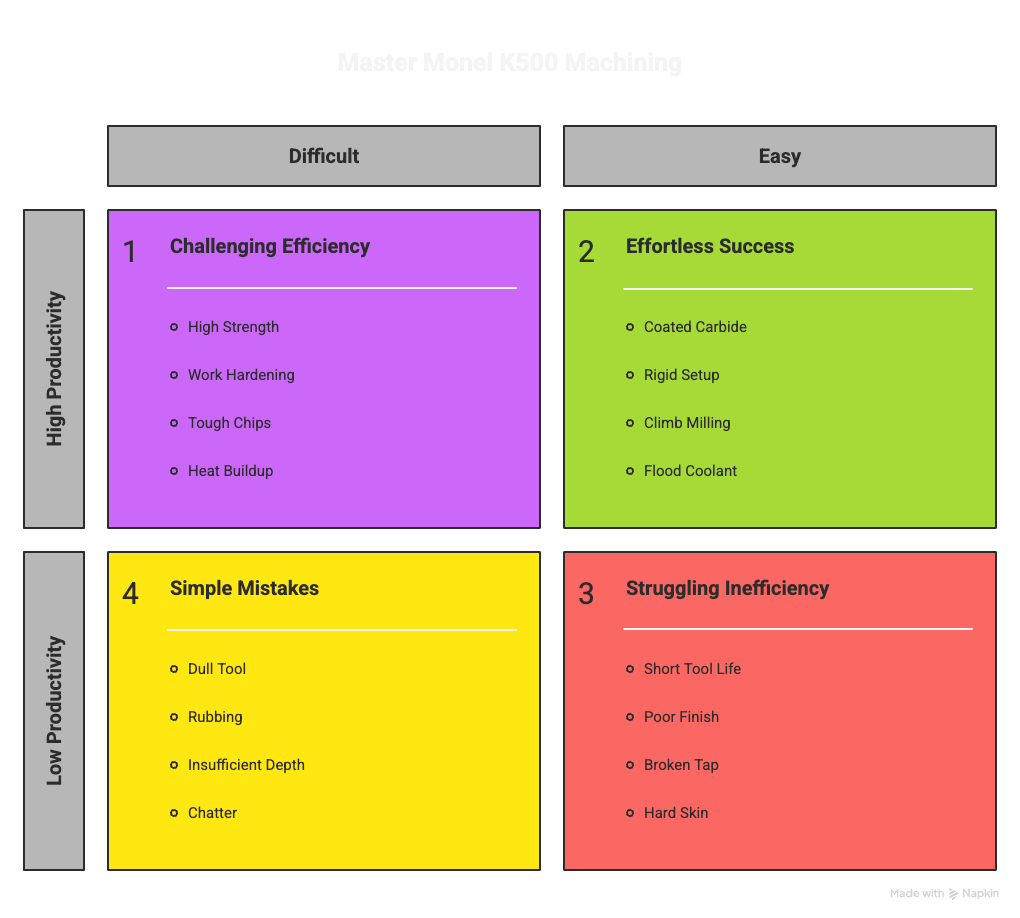
Monel K500 Machinability Overview
Monel K500 is considered a difficult-to-machine alloy due to its high strength, rapid work hardening tendency, and ability to retain toughness at elevated temperatures. However, with proper machining parameters, it can be processed efficiently for precision components used in marine, oil & gas, aerospace, and chemical industries.
What Is Monel K500 Alloy (Age-Hardenable Nickel-Copper Alloy Introduction)
Definition
Monel K500 is a precipitation-hardened nickel-copper alloy derived from Monel 400 with additions of aluminum and titanium. These additions allow age hardening, resulting in much higher strength and hardness.
Main Advantages
- Excellent seawater corrosion resistance
- Higher strength than Monel 400
- Good wear and fatigue resistance
- Non-sparking and non-magnetic in many conditions
Why Monel K500 Is Difficult to Machine
Monel K500 resists deformation during cutting. Instead of shearing easily, the alloy creates high cutting forces and heat, which can rapidly wear tools and damage surface finish if parameters are not optimized.
| Main Challenge | Effect |
|---|---|
| High Strength | Higher cutting load |
| Work Hardening | Surface becomes harder after tool rubbing |
| Low Thermal Conductivity | Heat stays near tool edge |
| Tough Chips | Difficult chip control |
Monel K500 vs Monel 400 Machinability Comparison
| Property | Monel 400 | Monel K500 |
|---|---|---|
| Strength | Medium | High |
| Hardness | Lower | Higher |
| Machinability | Better | More difficult |
| Tool Wear | Moderate | Higher |
Effect of High Strength and Hardness on Cutting Performance
Age-hardened Monel K500 can generate high tool pressure during turning or milling. This often leads to notch wear, edge chipping, and dimensional drift if machine rigidity is insufficient.
Recommended Cutting Speeds for Monel K500
| Operation | HSS Tools | Carbide Tools |
|---|---|---|
| Turning | 8–18 m/min | 25–60 m/min |
| Milling | 6–15 m/min | 20–50 m/min |
| Drilling | 5–12 m/min | 15–30 m/min |
Actual values depend on machine power, setup rigidity, coolant delivery, and heat treatment condition.
Best Tool Materials for Machining Monel K500
Recommended Choices
- Micrograin carbide inserts for general turning
- TiAlN / AlTiN coated carbide for heat resistance
- Ceramic tools for select high-speed finishing
- Cobalt HSS for taps and specialty drills
| Tool Type | Best Use |
|---|---|
| Carbide | General production machining |
| Coated Carbide | Longer tool life |
| Ceramic | High-speed finishing |
| HSS | Low-speed drilling/tapping |
Turning and Milling Tips for Monel K500
- Use rigid tool holders and short overhang
- Maintain positive feed rate to avoid rubbing
- Use sharp inserts with strong edge geometry
- Prefer constant engagement during milling
- Use climb milling when possible
Drilling and Tapping Challenges with Monel K500
Drilling can suffer from heat buildup and rapid flank wear. Tapping is especially challenging because of torque load and chip evacuation issues.
| Operation | Recommendation |
|---|---|
| Drilling | Peck cycle + high-pressure coolant |
| Tapping | Use forming taps or premium coated taps |
| Deep Holes | Gun drilling or step drilling |
Coolant and Lubrication Recommendations During Machining
Flood coolant or high-pressure emulsion is preferred to reduce cutting temperature and improve chip evacuation. For tapping, high-lubricity cutting oil often performs better than water-based coolant.
Work Hardening Issues and How to Prevent Them
Monel K500 hardens quickly if the tool rubs instead of cuts.
- Do not dwell in cut
- Keep feed consistent
- Replace dull tools early
- Use sufficient depth of cut to penetrate hardened layer
Surface Finish Optimization for Monel K500 Parts
| Method | Benefit |
|---|---|
| Sharp finishing insert | Lower tearing |
| Stable spindle setup | Reduced chatter |
| Fine feed rate | Better Ra finish |
| Coolant consistency | Less heat discoloration |
Heat Treatment Condition Impact on Machinability
Solution-treated Monel K500 is easier to machine than fully age-hardened condition. Many manufacturers rough machine before final aging treatment, then finish machine critical surfaces afterward.
Common Machining Problems and Solutions for Monel K500
| Problem | Likely Cause | Solution |
|---|---|---|
| Short tool life | Too much heat | Reduce speed, improve coolant |
| Poor finish | Dull tool / chatter | Use sharp insert, rigid setup |
| Hard skin | Rubbing | Increase feed, deeper cut |
| Broken tap | High torque | Use better lubricant and spiral tap |
Best Practices to Reduce Tool Wear and Increase Productivity
- Machine in solution-treated state when possible
- Use premium carbide tooling
- Keep setup rigid and vibration-free
- Use aggressive enough feed to cut cleanly
- Monitor tool wear before catastrophic failure
- Use coolant directly at cutting zone
Frequently Asked Questions About Monel K500 Machinability
Is Monel K500 hard to machine?
Yes. It is harder to machine than Monel 400 and most stainless steels because of strength and work hardening.
Can Monel K500 be drilled easily?
It can be drilled successfully with rigid setup, sharp tools, slower speeds, and strong coolant flow.
What is the best tool for Monel K500?
Coated carbide tools are usually the best balance of tool life, speed, and productivity.


 English
  Korean
  Japanese
  Arabic
  Spanish
  German
  Portuguese
  French
  Russian
  Italian