

Monel K500 vs Inconel 718 is a common material selection comparison when engineers need high strength nickel alloys for aggressive environments. Both alloys offer excellent performance, but they are designed for different priorities. Monel K500 is known for outstanding seawater corrosion resistance and non-magnetic behavior, while Inconel 718 is widely chosen for extreme strength and elevated-temperature service in aerospace and power industries.
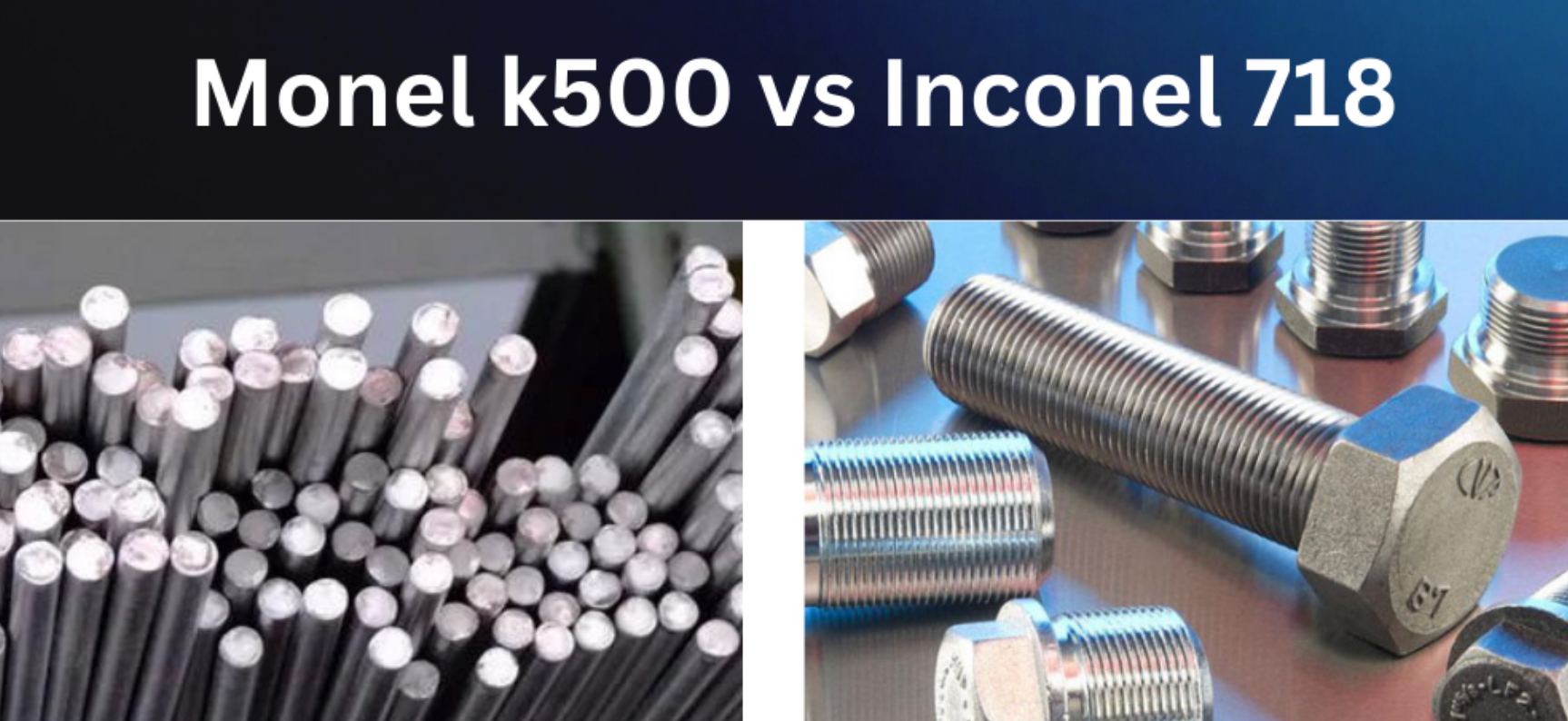
Monel K500 vs Inconel 718 Overview
Although both are nickel-based alloys, their chemistry and strengthening mechanisms are different. Monel K500 is a nickel-copper age-hardenable alloy. Inconel 718 is a nickel-chromium precipitation-hardened superalloy optimized for high-temperature mechanical strength.
| Alloy | Main Advantage | Typical Industry |
|---|---|---|
| Monel K500 | Marine corrosion resistance | Marine, offshore, pumps |
| Inconel 718 | High strength at heat | Aerospace, turbines, energy |
What Is Monel K500 Alloy (Nickel-Copper Age-Hardenable Alloy)
Monel K500 is based on Monel 400 with additions of aluminum and titanium, allowing precipitation hardening. It combines high strength with exceptional resistance to seawater, sour gas, and many chloride environments.
What Is Inconel 718 Alloy (Nickel-Chromium Superalloy)
Inconel 718 is a nickel-chromium alloy strengthened by niobium, titanium, and aluminum through age hardening. It is widely used where creep resistance, fatigue strength, and heat resistance are critical.
Chemical Composition Comparison of Monel K500 and Inconel 718
| Element | Monel K500 | Inconel 718 |
|---|---|---|
| Nickel | High | High |
| Copper | High | Very Low |
| Chromium | Low | High |
| Iron | Low | Moderate |
| Niobium | Minimal | High |
Monel K500 relies on nickel-copper chemistry for corrosion resistance. Inconel 718 relies on nickel-chromium-niobium chemistry for high-temperature strength.
Strength and Mechanical Properties Comparison
| Property | Monel K500 | Inconel 718 |
|---|---|---|
| Tensile Strength | High | Very High |
| Yield Strength | High | Very High |
| Fatigue Resistance | Good | Excellent |
| Creep Resistance | Moderate | Excellent |
For structural loading at elevated temperature, Inconel 718 is usually stronger.
Hardness Comparison Between Monel K500 and Inconel 718
Both alloys can be age hardened, but Inconel 718 often reaches higher strength and hardness in aerospace heat-treated conditions. Monel K500 still offers excellent wear resistance for shafts, fasteners, and pump parts.
Corrosion Resistance Comparison in Marine and Chemical Environments
| Environment | Better Choice | Reason |
|---|---|---|
| Seawater | Monel K500 | Excellent Cu-Ni marine resistance |
| Chlorides | Monel K500 | Strong pitting resistance in many cases |
| Oxidizing acids | Inconel 718 | Chromium oxide protection |
| High-temperature oxidation | Inconel 718 | Designed for hot oxidizing service |
High Temperature Performance Comparison
Inconel 718 is clearly superior for temperatures where strength retention and creep resistance are required. It is commonly used up to around 650–700°C service conditions depending on design. Monel K500 is not intended for extreme hot-section turbine service.
Cryogenic Performance Comparison
Both alloys perform well at low temperatures and retain toughness. Monel K500 is frequently used in cryogenic shafts and valves, while Inconel 718 is also suitable for aerospace low-temperature environments.
Machinability and Fabrication Differences
| Factor | Monel K500 | Inconel 718 |
|---|---|---|
| Machinability | Difficult | Very Difficult |
| Work Hardening | High | Very High |
| Tool Wear | High | Very High |
In general, Inconel 718 is more challenging to machine than Monel K500.
Weldability Comparison of Monel K500 vs Inconel 718
Inconel 718 has established welding procedures and is commonly welded in aerospace and industrial fabrication. Monel K500 can be welded, but many critical parts are fabricated before age hardening, and welding procedure control is important.
Typical Applications (Marine, Aerospace, Oil & Gas, Fasteners)
| Application | Preferred Alloy |
|---|---|
| Marine shafts | Monel K500 |
| Pump components | Monel K500 |
| Jet engine hardware | Inconel 718 |
| Gas turbine bolts | Inconel 718 |
| Oilfield fasteners | Either depending environment |
Cost and Availability Comparison
Monel K500 and Inconel 718 are both premium alloys. Inconel 718 often has wider global availability due to aerospace demand, while Monel K500 may command higher prices in certain bar and fastener forms because of lower volume production.
| Factor | Monel K500 | Inconel 718 |
|---|---|---|
| Raw Material Cost | High | High |
| Availability | Moderate | Strong |
| Processing Cost | High | Very High |
Advantages and Disadvantages of Each Alloy
Monel K500
- Excellent seawater resistance
- High strength with non-sparking uses
- Less suitable for extreme heat
Inconel 718
- Exceptional high-temperature strength
- Excellent fatigue and creep resistance
- Harder to machine and often more process-intensive
How to Choose Between Monel K500 and Inconel 718
- Choose Monel K500 for seawater, marine shafts, chloride service, and corrosion-focused strength.
- Choose Inconel 718 for turbines, aerospace fasteners, high-heat structural parts, and fatigue-critical service.
- Compare lifecycle cost, not only raw material price.
Frequently Asked Questions About Monel K500 vs Inconel 718
Which is stronger, Monel K500 or Inconel 718?
Inconel 718 is generally stronger, especially at elevated temperatures.
Which alloy is better for seawater?
Monel K500 is usually the better choice for seawater and marine environments.
Is Inconel 718 harder to machine than Monel K500?
Yes, Inconel 718 is typically more difficult to machine because of higher strength and severe work hardening.


 English
  Korean
  Japanese
  Arabic
  Spanish
  German
  Portuguese
  French
  Russian
  Italian