

The price of MP35N alloy depends on product form, order quantity, dimensions, manufacturing route, heat treatment, certification and delivery location. MP35N is a high-strength, corrosion-resistant nickel-cobalt-chromium-molybdenum alloy used in demanding applications such as medical devices, oil and gas equipment, marine hardware and aerospace components. Its specialized composition and processing make it considerably more expensive than stainless steel and many standard nickel alloys. Because supplier prices change with metal markets and availability, a current quotation is needed for an exact price.
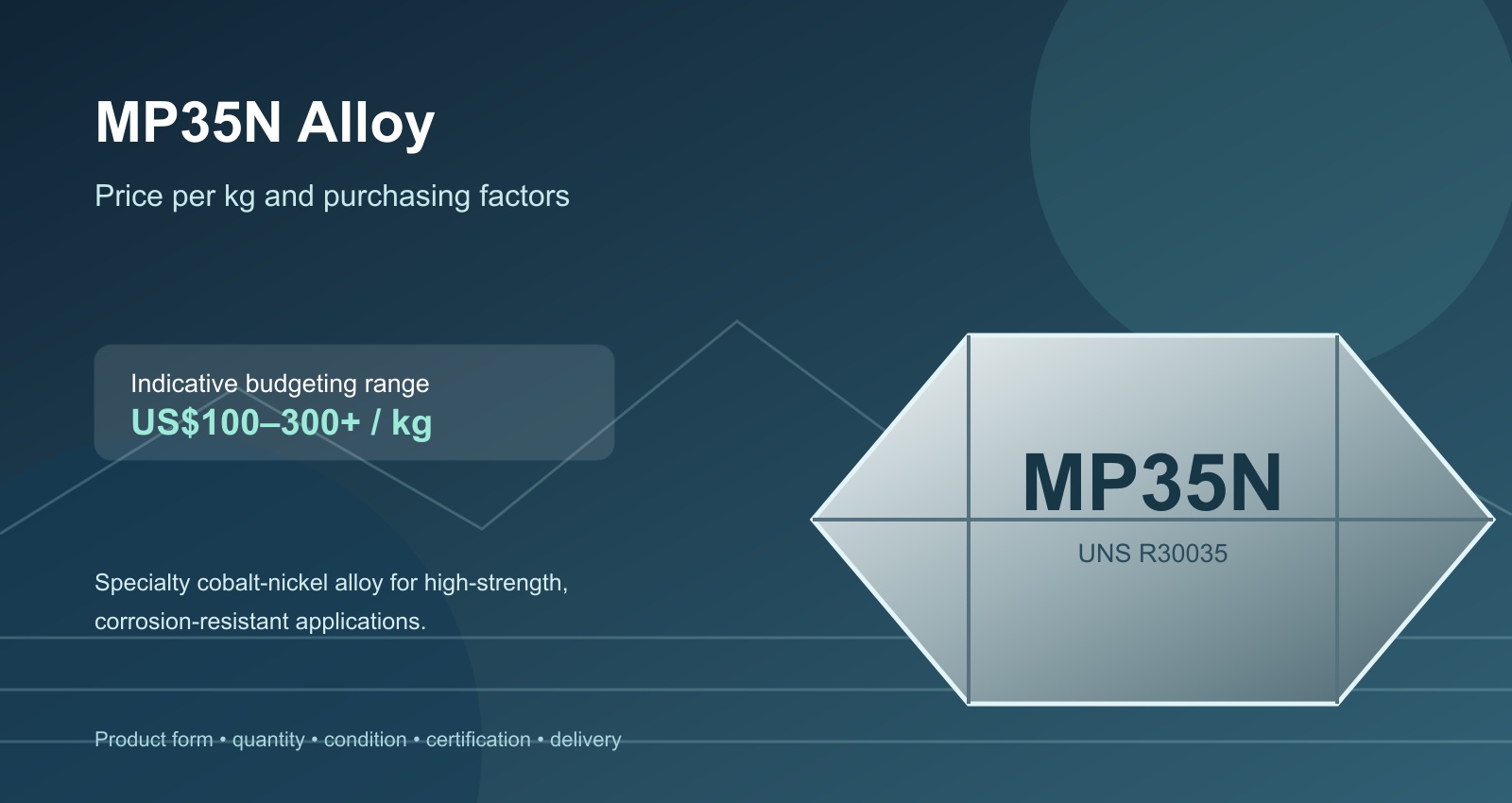
Typical MP35N Price Range
As a rough purchasing guide, MP35N mill products may cost approximately US$100–300 or more per kilogram. This is an indicative range, not a live market quote. Small orders, fine wire, precision-ground bar, custom forgings and aerospace- or medical-grade traceability may cost substantially more.
| Product form | Indicative price range | Common price drivers |
|---|---|---|
| Bar and rod | US$100–250+/kg | Diameter, condition, tolerance, quantity and surface finish |
| Wire | US$150–350+/kg | Wire diameter, drawing process, tensile requirements and spool size |
| Sheet and strip | US$150–350+/kg | Thickness, width, flatness, finish and availability |
| Tube and specialty products | US$200–450+/kg | Seamless production, wall thickness, inspection and custom dimensions |
| Custom machined parts | US$300+/kg equivalent | Material yield, machining time, tooling, tolerances and inspection |
These ranges are broad estimates for budgeting. They can differ by country, supplier, specification and market conditions. Compare quotations that cover the same alloy designation, product form, condition, quantity, testing and delivery basis.
Why MP35N Costs More Than Standard Alloys
MP35N is a premium cobalt-nickel-based alloy designed to retain high strength and corrosion resistance in severe environments. It contains substantial amounts of cobalt, nickel, chromium and molybdenum. These alloying elements are more costly than the iron-based materials used in common steels, and prices for them can fluctuate independently.
The alloy also requires controlled processing to achieve its specified mechanical properties. Depending on the product and application, production may involve melting and remelting, hot working, cold work, solution treatment, aging or other closely controlled operations. Additional inspection and traceability can add further cost.
MP35N Composition and Raw-Material Cost
MP35N is commonly identified as UNS R30035. Exact chemistry limits depend on the product specification, but the alloy is primarily based on cobalt and nickel, with chromium and molybdenum as major additions.
| Element | Typical role | Price relevance |
|---|---|---|
| Cobalt | Supports strength and high-temperature performance | Can be a major contributor to raw-material cost |
| Nickel | Contributes to corrosion resistance and alloy stability | Market movements affect alloy surcharges |
| Chromium | Improves corrosion and oxidation resistance | Part of the alloy’s material-cost base |
| Molybdenum | Contributes to strength and resistance in aggressive environments | Can cause additional price variation |
Suppliers may calculate alloy surcharges using the current cost of these metals, along with conversion, energy and processing charges. Ask whether a quotation is fixed for a stated period or subject to surcharge adjustment.
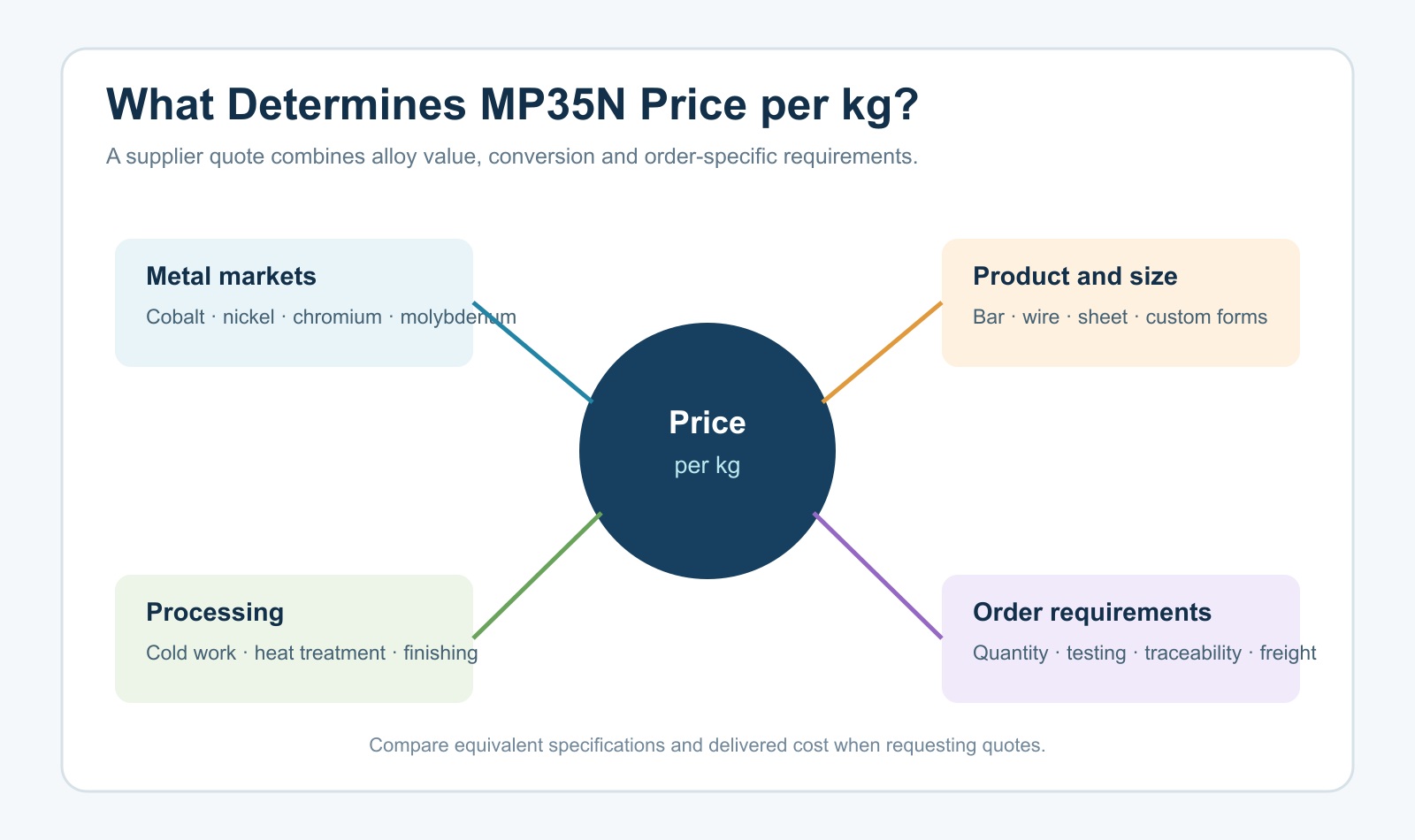
Key Factors That Affect MP35N Price per kg
Product Form and Dimensions
Bar, wire, strip, sheet, tube, forgings and finished components each require different manufacturing processes. Fine wire and thin strip may require repeated drawing or rolling stages, while seamless tubing and precision-ground bar involve additional processing. Nonstandard dimensions can also require a special production run.
Order Quantity
Small quantities often have a higher unit price because setup, testing, handling and documentation costs are spread across fewer kilograms. Larger orders may qualify for improved pricing, although mill production can involve longer lead times and minimum order quantities.
Mechanical Condition and Processing
MP35N properties depend on processing history. Cold-worked or aged products may require additional operations and testing to meet specified strength and hardness values. Make sure the supplier quotes the required condition rather than simply the alloy name.
Certification and Testing
Basic commercial documentation generally costs less than a full package of mill traceability, mechanical testing, chemical analysis and independent inspection. Medical, aerospace, oil and gas or other regulated uses may require specific documentation and approved sources.
Availability and Lead Time
Stock material may cost more per kilogram than a mill-direct order, but it can be delivered faster and avoid production delays. Special sizes or conditions may need to be manufactured, which can increase both lead time and cost.
Freight, Duties and Currency
The delivered price may include international freight, insurance, customs duties, taxes, packaging and currency-conversion costs. A low ex-works price may not be the most economical option once the material reaches the project site.
MP35N Compared with Other Alloys
MP35N is usually selected when its combination of strength and corrosion resistance is needed. It should not be compared with lower-cost alloys by price alone; operating conditions and the required service life matter.
| Material | General comparison | Cost consideration |
|---|---|---|
| MP35N | Very high strength with strong corrosion resistance in demanding service | Premium alloy; processing and certification can be significant |
| 316L stainless steel | Broadly useful corrosion-resistant steel, but with much lower strength in many conditions | Typically far less expensive |
| Inconel 718 | High-strength nickel alloy with a different chemistry and temperature-performance profile | Often less costly, but not a direct substitute for every application |
| Elgiloy | Cobalt-based alloy used in selected spring and medical applications | Also a specialty material; compare by specification and product form |
Any substitution should be reviewed against corrosion conditions, load, temperature, fatigue life, fabrication requirements and applicable standards. A lower material price can lead to higher lifecycle cost if it shortens service life or requires more maintenance.
How to Get an Accurate MP35N Quote
Provide suppliers with a complete specification so they can quote comparable products. Include:
- Alloy designation, such as MP35N or UNS R30035
- Product form and exact dimensions
- Quantity and required lengths or cut sizes
- Applicable ASTM, AMS or customer specification
- Required mechanical condition and properties
- Chemical analysis and certification requirements
- Testing and inspection requirements
- Surface finish, tolerances and packaging
- Delivery address, shipping terms and required date
Ask suppliers to separate material price, processing, cutting, testing, certification, packaging and freight. This makes it easier to identify the source of price differences and avoid unexpected charges.
How to Reduce MP35N Purchasing Costs
Cost savings should preserve the required material properties and traceability. Consider consolidating multiple requirements into one order, selecting standard stock dimensions, accepting practical tolerances and checking whether an approved supplier has suitable inventory.
For machined parts, review the design for material efficiency. Reducing unnecessary machining allowance or using a suitable near-net-shape process can lower the amount of premium alloy removed as scrap. Any change to grade, condition or specification should be approved by the responsible design or materials engineer.
Frequently Asked Questions
What is the price of MP35N alloy per kg?
A broad budgeting estimate is about US$100–300 or more per kg for MP35N mill products. Fine wire, custom products, small orders and tightly certified material can exceed this range. The exact price depends on dimensions, condition, quantity, testing, supplier availability and delivery location.
Why is MP35N alloy so expensive?
MP35N uses costly alloying elements, including cobalt, nickel, chromium and molybdenum. It also requires controlled manufacturing and may need additional heat treatment, mechanical testing and traceability. These raw-material and processing costs place it above common stainless steels and many standard engineering alloys.
How can I get the best price for MP35N?
Request quotes from qualified suppliers using the same specification, product form, dimensions, quantity, mechanical condition and certification requirements. Standard sizes, larger combined orders and available stock may reduce cost. Verify the mill certificate and heat number before accepting a lower-priced offer.


 English
 Korean
 Japanese
 Arabic
 Spanish
 German
 Portuguese
 French
 Russian
 Italian