

The price of Nickel Alloy 75 bar depends on more than the alloy designation. Bar diameter, length, order quantity, material condition, manufacturing route, certification, machining, and delivery location can all affect the final quotation. Nickel Alloy 75, also known as Nimonic 75 or UNS N06075, is a nickel-chromium alloy used in applications that require strength and oxidation resistance at elevated temperatures. Buyers comparing Nickel Alloy 75 bar prices should confirm that each quotation covers the same specification, dimensions, testing, documentation, and delivery terms. This guide explains the main cost factors, what to include in a quote request, and how to compare suppliers without overlooking important technical requirements.
Nickel Alloy 75 Bar Price: What Buyers Should Know
What Is Nickel Alloy 75?
Nickel Alloy 75 is a nickel-chromium alloy commonly supplied in bar and other wrought product forms. It is also referred to as Nimonic 75 and identified by the UNS number N06075. The alloy is selected for certain high-temperature applications because of its oxidation resistance and useful mechanical properties. Typical uses may include furnace components, fasteners, aerospace-related parts, industrial equipment, and components exposed to elevated temperatures, depending on the design requirements.
Nickel Alloy 75 should not be confused with every other nickel-based alloy. Similar-sounding grades can differ in chemistry, heat-treatment response, mechanical properties, and intended service conditions. When requesting a quote, buyers should specify the exact grade and product standard required by the project rather than relying on a generic description such as “high-temperature nickel bar.”
Nickel Alloy 75 Bar Price at a Glance
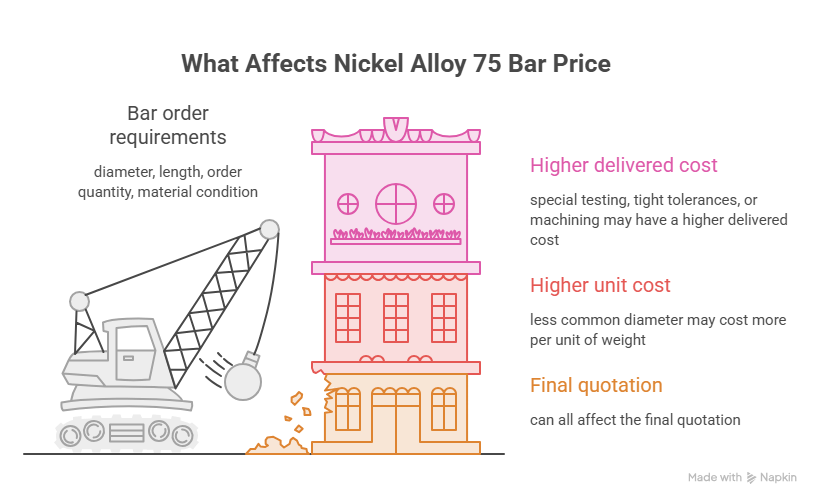
There is no single universal price for Nickel Alloy 75 bar. Suppliers typically quote based on current stock, size, quantity, condition, documentation requirements, and shipment destination. A small quantity of a less common diameter may cost more per unit of weight than a larger order of a standard size. Likewise, a bar that requires special testing, tight tolerances, or machining may have a higher delivered cost than standard stock.
| Price factor | How it can affect the quotation |
|---|---|
| Diameter and length | Non-standard sizes or cut lengths may require additional processing or sourcing. |
| Order quantity | Small orders may carry higher per-unit handling or cutting costs; larger quantities may improve pricing. |
| Material condition | Specified condition, heat treatment, or mechanical requirements can affect availability and processing. |
| Manufacturing route | Production method and product specification may influence cost, lead time, and inspection scope. |
| Certification and testing | Material test reports, additional inspection, or independent testing may add cost and time. |
| Machining and cutting | Cut-to-length service, machining allowance, or finished dimensions can increase the total. |
| Freight and destination | Packaging, shipping method, export requirements, and delivery location affect landed cost. |
For this reason, a supplier’s advertised price per kilogram or per pound should be treated as an initial reference, not a complete project cost. The final quotation should state the pricing basis, quantity, material scope, delivery terms, and any charges that are not included.
Main Factors That Influence Nickel Alloy 75 Bar Cost
Bar Diameter, Length, and Tolerance
Dimensions are among the first details a supplier needs to price a Nickel Alloy 75 bar accurately. Common stock diameters may be available more quickly than unusual sizes, while special lengths or close dimensional tolerances may require additional preparation. If the bar will be machined, buyers should clarify whether the quoted dimensions are finished dimensions or stock dimensions with machining allowance.
Dimensional requirements should be stated clearly. A request that lists only a diameter may leave the required length, straightness, surface condition, or tolerance unspecified. These details can lead to differences between supplier quotations and may create problems when the material reaches the workshop.
Quantity and Order Size
Order size can affect both availability and price. A supplier may have enough material for a small order in stock but need to source a larger volume from a mill or another distributor. Small orders may also involve minimum order charges, cutting fees, or handling costs that make the quoted unit price appear higher.
For recurring demand, buyers can ask suppliers whether a scheduled release, blanket order, or consolidated shipment is available. Such arrangements may improve planning, but the commercial terms should define how long the price is valid, how stock is reserved, and what happens if the schedule changes.
Material Condition and Mechanical Requirements
The specified delivery condition can influence which material a supplier can offer and how quickly it can ship. If the project requires particular mechanical properties, heat treatment, or other condition-related requirements, include them in the inquiry. Do not assume that all bars described as Nickel Alloy 75 have identical mechanical test results or processing histories.
Where strength, hardness, or other properties are critical, the purchase documents should identify the governing specification and the required acceptance criteria. If the project uses a customer-specific standard, provide the relevant revision or requirements to the supplier before quotation.
Specification and Product Documentation
A quotation may change depending on the product specification and documentation package. Buyers may require a material test report or mill test certificate, heat or lot traceability, chemical analysis, mechanical test results, inspection records, or other quality documents. Additional testing or third-party inspection may also affect both price and lead time.
Specify documentation requirements in the request for quotation and purchase order. If the documents need to follow a particular format or be submitted for approval before shipment, say so early. Suppliers may need additional time to prepare, review, or obtain the required records.
Stock Availability and Lead Time
Material already in the required diameter, length, and condition may be quoted differently from material that needs mill production or processing. “Available” can mean physically in stock, available from another warehouse, or expected from a future production run. Ask the supplier to identify which situation applies.
Lead time may include sourcing, cutting, inspection, document review, packaging, and dispatch. For a time-sensitive project, ask for an estimated ship date and confirm whether it depends on an incoming shipment, test results, or another supplier. A clear schedule helps purchasing teams compare the actual delivery commitment rather than just the quoted material price.
Processing, Packaging, and Freight
Cutting bars to length, machining, special marking, protective packaging, or export preparation can add to the overall order cost. These services can still be commercially useful if they reduce handling or production work at the buyer’s facility. Compare the cost of processing at the supplier with the cost, time, and material loss involved in completing the work in-house.
Freight should be considered as part of the landed cost. Shipping method, delivery location, packaging needs, insurance, customs documentation, and import duties may all affect the amount ultimately paid. Make sure supplier quotations use comparable delivery terms before deciding which offer is more competitive.
How to Request a Nickel Alloy 75 Bar Quote
A detailed request for quotation helps suppliers respond with comparable offers and reduces the chance of receiving a price for the wrong product. Include the technical and commercial information that affects the order, and attach a drawing or project specification when the bar will be machined or used in a controlled application.
| Information to provide | What to clarify |
|---|---|
| Material designation | Nickel Alloy 75, Nimonic 75, or UNS N06075, as required by the project |
| Product form | Round bar or another specified bar profile |
| Dimensions | Diameter, length, tolerances, and any machining allowance |
| Quantity | Number of bars, total length, or total weight |
| Specification | Applicable product standard, revision, and customer requirements |
| Condition | Required delivery condition, heat treatment, or mechanical criteria |
| Documentation | Required material certificates, traceability, testing, and inspection records |
| Processing | Cutting, machining, marking, testing, or special packaging |
| Delivery details | Ship-to location, target date, freight preference, and export requirements |
If the project has restrictions on substitutions, state that no alternative grade or condition may be supplied without written approval. This is especially important when an order is urgent and a supplier suggests a material that appears similar but may not meet the design basis.
How to Compare Supplier Quotations
Price comparisons are most useful when each quotation covers the same technical and commercial scope. Check that every offer identifies the same grade, product form, dimensions, quantity, condition, specification, and documentation. Then compare the total cost, lead time, and delivery terms.
- Confirm that the quoted grade is Nickel Alloy 75 / UNS N06075 where that designation is required.
- Compare the same diameter, length, tolerance, and quantity.
- Check whether the quoted condition and mechanical requirements match the order.
- Review the certificate and traceability package, not just the material description.
- Identify whether cutting, testing, packaging, and freight are included.
- Check the quotation validity period and any minimum order quantity.
- Distinguish confirmed stock from material that still needs to be produced or sourced.
- Get written approval before accepting any proposed substitution.
A low unit price may not be the lowest-cost option once processing, freight, inspection, or schedule risk is considered. For production orders, a supplier’s ability to provide consistent documentation and reliable delivery can be as important as the initial quoted rate.
Ways to Manage Nickel Alloy 75 Bar Purchasing Costs
Consolidate Requirements Where Practical
If several departments or production stages need the same material, combining requirements may help reduce repeated freight and processing charges. Before consolidating, confirm that the combined specification, dimensions, and delivery schedule are genuinely compatible.
Check Standard Stock Sizes
Ask whether a standard stock diameter or length can meet the design requirements. Using an available size may reduce lead time or avoid special production charges. Any dimensional change must be approved by the responsible engineer; procurement savings should never override design requirements.
Define Inspection Requirements Early
Testing and inspection requirements are easier to price and schedule when they are known before an order is placed. Clearly state the required documents, tests, inspection hold points, and review process in the original inquiry.
Evaluate Total Landed Cost
Compare the cost of material, processing, packaging, freight, insurance, and any applicable import charges. For international orders, confirm who is responsible for customs clearance and what delivery terms apply. A complete cost comparison makes it easier to identify the best overall offer.
Plan Purchasing Around Production Needs
Ordering too early can tie up budget and storage capacity, while ordering too late can create expensive expedited freight or production delays. Work backward from the required shop date and include time for inspection, document review, and receiving checks. For repeat purchases, discuss forecast visibility or scheduled releases with qualified suppliers.
Supplier and Material Verification Checklist
| Check | Evidence to request or review |
|---|---|
| Correct alloy | Quotation and order documents identify the required grade and designation |
| Correct bar dimensions | Diameter, length, tolerance, and quantity are stated in writing |
| Specification compliance | Applicable standard, revision, and any project-specific requirements are confirmed |
| Traceability | Heat or lot identification is linked to the delivered material and documentation |
| Testing and certification | Required certificates, tests, and inspection records are included in the scope |
| Schedule | Availability and dispatch timing are clear, including any processing steps |
| Commercial scope | Price basis, processing, packaging, freight, and exclusions are identified |
| Substitution control | No alternate grade or condition will be supplied without written approval |
Frequently Asked Questions
How much does Nickel Alloy 75 bar cost?
There is no fixed price because cost depends on diameter, length, quantity, condition, specification, documentation, processing, stock availability, and delivery location. Request a quotation with complete technical details to get a price that can be compared accurately.
What is Nickel Alloy 75 also called?
Nickel Alloy 75 is also known as Nimonic 75 and is commonly identified by the UNS designation N06075. Confirm the exact grade and product specification required for your application before ordering.
What affects the price of Nickel Alloy 75 round bar?
The main factors are bar size, order quantity, manufacturing and delivery condition, certification and testing, cutting or machining, availability, and freight. Special dimensions and short lead times can also affect the quotation.


 English
 Korean
 Japanese
 Arabic
 Spanish
 German
 Portuguese
 French
 Russian
 Italian