

Nickel-Chromium (NiCr) wire—also known as Nichrome wire—is one of the most widely used resistance heating alloys in industrial and household heating systems. Its pricing is influenced by nickel content, chromium ratio, wire diameter, temperature resistance requirements, and manufacturing complexity. This guide provides a complete SEO-optimized breakdown of NiCr wire price factors, grades, and global market differences.
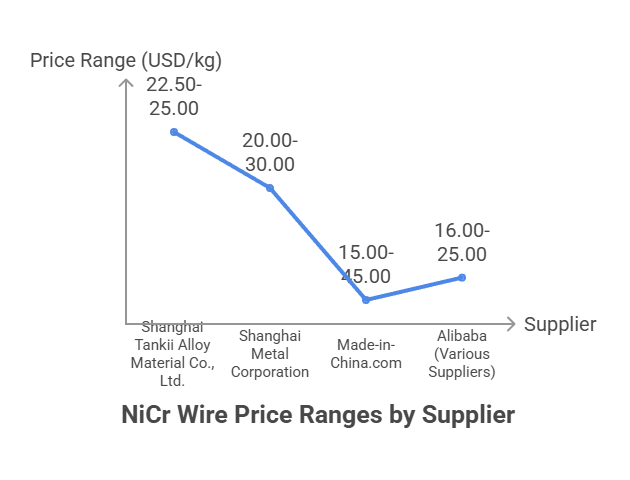
Nickel-Chromium (NiCr) Wire Price Overview
NiCr wire is generally considered a mid-to-high cost resistance alloy. The price is mainly determined by nickel content, alloy grade (such as 80/20 or 60/15), and application requirements such as heating stability and oxidation resistance.
What Is Nickel-Chromium (Nichrome) Wire
Basic Definition
Nickel-Chromium wire is a resistance heating alloy composed mainly of nickel and chromium. It is widely used in electric heaters, furnaces, toasters, industrial heating elements, and laboratory equipment.
Main Characteristics
- High electrical resistance
- Excellent oxidation resistance at high temperature
- Stable performance under continuous heating
- Long service life in harsh environments
Average Nickel-Chromium Wire Price Range
Price by Unit
| Unit | Price Range | Description |
|---|---|---|
| USD/kg | $20 – $80 | Depends on grade, diameter, and surface finish |
| USD/meter | $0.01 – $2.5 | Varies significantly by wire gauge |
Price Differences by Grade (NiCr 80/20, 70/30, 60/15)
Grade Comparison Table
| Grade | Nickel Content | Price Level | Main Application |
|---|---|---|---|
| NiCr 80/20 | High | Highest | High-end heating elements, industrial furnaces |
| NiCr 70/30 | Medium-High | High | Industrial heating systems |
| NiCr 60/15 | Lower Ni content | Medium | General heating applications |
Industrial vs Heating Element Grade Price Comparison
| Type | Price Level | Characteristics |
|---|---|---|
| Industrial Grade | Higher | Stricter tolerance, higher durability |
| Heating Element Grade | Lower–Medium | Standard resistance wire for appliances |
Nickel and Chromium Content Impact on Price
Nickel is the most expensive component in NiCr wire. Higher nickel content directly increases cost. Chromium improves oxidation resistance but has a smaller cost impact compared to nickel.
Wire Diameter and Gauge Effect on Pricing
Size Influence
Thinner wires require higher precision drawing processes, increasing production cost per meter.
| Wire Diameter | Price Level |
|---|---|
| Very Fine (0.02–0.1 mm) | Very High |
| Medium (0.1–1 mm) | Medium |
| Thick (>1 mm) | Lower per meter cost |
High-Temperature Resistance Requirement and Cost Impact
NiCr wire designed for higher temperature (up to 1200°C+) requires better alloy control and heat treatment, increasing production cost.
Surface Finish and Processing
| Condition | Cost Level | Description |
|---|---|---|
| Annealed | Higher | Soft state, better flexibility |
| Hard Drawn | Medium | Higher strength, standard industrial use |
Manufacturing Process Cost Impact
Main Production Steps
- Vacuum or induction melting
- Hot rolling or forging
- Wire drawing with precision dies
- Heat treatment for stability
Each process step increases cost due to energy consumption and precision requirements.
MOQ and Bulk Order Price Differences
Minimum order quantity (MOQ) significantly affects pricing. Small orders have higher unit costs due to setup, while bulk orders reduce cost per kilogram substantially.
Global Nickel Market Influence (LME Price Impact)
Nickel price fluctuations on the London Metal Exchange (LME) directly affect NiCr wire cost, especially for high-nickel grades like 80/20.
Regional Price Differences
| Region | Price Level | Reason |
|---|---|---|
| USA | Very High | Labor cost and strict quality standards |
| Europe | High | Energy cost and regulations |
| China | Competitive | Large-scale production advantage |
| India | Medium | Growing manufacturing capability |
Typical Price Table for Common NiCr Wire Grades
| Grade | Diameter | Price Range ($/kg) |
|---|---|---|
| NiCr 80/20 | 0.5 mm | 40 – 80 |
| NiCr 70/30 | 0.5 mm | 35 – 70 |
| NiCr 60/15 | 0.5 mm | 25 – 55 |
How to Get Best Nickel-Chromium Wire Price from Suppliers
- Compare multiple suppliers across regions
- Choose correct grade based on application
- Optimize diameter specification
- Place bulk orders to reduce cost
- Track nickel LME price trends
Frequently Asked Questions About NiCr Wire Price
Why is NiCr wire expensive?
Because of high nickel content, precision manufacturing, and high-temperature performance requirements.
Which grade is most commonly used?
NiCr 80/20 is the most widely used for industrial heating elements.
Does wire thickness affect price?
Yes, thinner wires are more expensive per meter due to higher precision processing.


 English
  Korean
  Japanese
  Arabic
  Spanish
  German
  Portuguese
  French
  Russian
  Italian