

Nickel-Titanium (Nitinol) wire price is influenced by its unique material properties, complex manufacturing process, and strict quality requirements, especially for medical applications. As a shape memory alloy (SMA), Nitinol is widely used in medical devices, aerospace components, robotics, and precision engineering due to its superelasticity and shape memory effect. This guide provides a complete breakdown of Nitinol wire pricing, including material differences, diameter impact, standards, and global market trends.
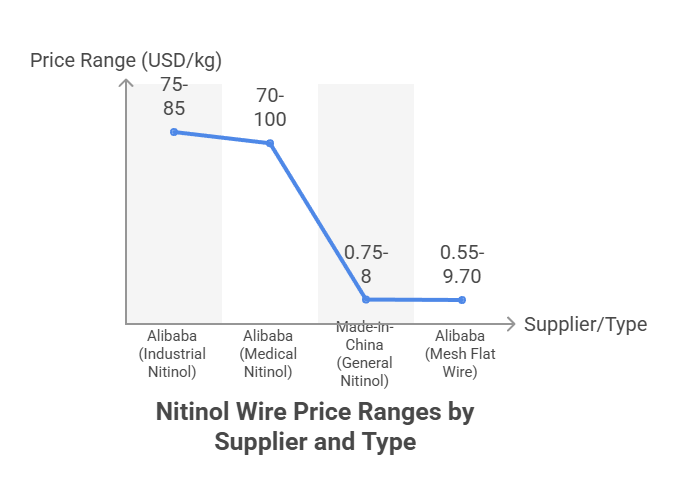
Nickel-Titanium (Nitinol) Wire Price Overview
Nitinol wire is significantly more expensive than conventional metal wires due to its advanced functionality, strict composition control, and specialized processing techniques. Prices vary depending on grade, diameter, surface finish, and application requirements.
What Is Nitinol Wire (Shape Memory Alloy Introduction)
Material Definition
Nitinol is a nickel-titanium alloy known as a shape memory alloy (SMA). It can return to its original shape after deformation when exposed to heat or stress changes.
Key Properties
- Shape memory effect
- Superelasticity
- Excellent fatigue resistance
- Corrosion resistance in biological environments
Average Nitinol Wire Price Range
Price by Unit
| Unit | Price Range | Description |
|---|---|---|
| USD/kg | $200 – $1200 | Highly dependent on medical or industrial grade |
| USD/meter | $0.5 – $15 | Depends on diameter and specification |
Medical Grade vs Industrial Grade Nitinol Wire
Price Differences
| Type | Price Level | Characteristics |
|---|---|---|
| Medical Grade | Very High | ASTM F2063 compliant, high purity, strict testing |
| Industrial Grade | High | Used in robotics and engineering applications |
Nickel and Titanium Raw Material Impact on Price
The price of Nitinol wire is strongly influenced by nickel and titanium raw material costs. Both metals are sensitive to global market fluctuations, which directly impact final pricing.
Diameter and Wire Thickness Effect on Pricing
Size Influence
Smaller diameter wires require more precise processing, increasing cost per meter. Larger diameters reduce per-meter cost but increase total material consumption.
| Diameter Range | Price Level |
|---|---|
| 0.01 – 0.1 mm | Very High |
| 0.1 – 0.5 mm | High |
| 0.5 – 2 mm | Medium |
Superelastic vs Shape Memory Wire Price Differences
| Type | Price Level | Description |
|---|---|---|
| Superelastic Wire | Higher | High fatigue resistance, used in medical stents |
| Shape Memory Wire | Medium | Activated by temperature change |
ASTM F2063 Medical Standard Impact on Cost
ASTM F2063 certification significantly increases cost due to strict requirements on composition control, biocompatibility testing, and traceability documentation. Medical-grade Nitinol must meet these standards for implantable devices.
Surface Treatment and Finish Cost
Common Surface Types
- Polished surface (higher cost, medical use)
- Oxidized surface (moderate cost)
- Coated wire (premium cost for special applications)
Manufacturing Process Cost Impact
Key Production Steps
- Vacuum melting for high purity alloy formation
- Cold drawing for precise diameter control
- Heat treatment for shape memory properties
Each step requires specialized equipment and strict process control, significantly increasing production cost.
MOQ Impact on Price
Minimum order quantity (MOQ) has a strong impact on pricing. Small orders typically have much higher per-unit costs due to setup and production inefficiencies, while bulk orders significantly reduce unit price.
Regional Price Differences
| Region | Price Level | Reason |
|---|---|---|
| USA | Very High | Medical certification and labor cost |
| Europe | High | Strict medical regulations |
| China | Competitive | Lower manufacturing cost |
| India | Medium | Growing industrial production base |
Typical Price Table for Nitinol Wire
| Grade | Diameter | Price Range ($/kg) |
|---|---|---|
| Medical Grade | 0.1 mm | 500 – 1200 |
| Medical Grade | 0.5 mm | 400 – 900 |
| Industrial Grade | 0.5 mm | 200 – 500 |
Aerospace vs Medical vs Industrial Application Price Differences
Application-Based Pricing
| Application | Price Level | Requirement Level |
|---|---|---|
| Medical | Very High | Highest purity and certification |
| Aerospace | High | High fatigue resistance required |
| Industrial | Medium | General engineering use |
How to Get the Best Nitinol Wire Price from Suppliers
- Compare multiple suppliers and manufacturers
- Clearly define application requirements to avoid over-specification
- Order in bulk to reduce unit cost
- Choose suitable grade (medical vs industrial)
- Monitor raw material market trends (Ni & Ti)
Frequently Asked Questions About Nitinol Wire Price
Why is Nitinol wire so expensive?
Because of complex vacuum melting production, strict composition control, and specialized applications such as medical devices.
What affects Nitinol wire price the most?
Diameter size, medical certification (ASTM F2063), and raw material cost are the main factors.
Can industrial Nitinol replace medical grade?
No, medical applications require strict compliance and testing that industrial grade does not meet.


 English
  Korean
  Japanese
  Arabic
  Spanish
  German
  Portuguese
  French
  Russian
  Italian